Reproducibility in the Age of Agents
AI is an ethical & environmental disaster that requires brilliant leadership across every level of society 😔
Why, when it is easier than ever to write well-designed code, are we instead getting inundated with slop1?
The answer is incentives.
Bioinformatics is following: the field is going to automate the very reproducibility crisis itself.
Galaxy MUST incentivize reproducibility for agents.
Designing for human reproducibility supercharges agents.
Marius made the point Monday: UDTs were in development before agentic use of Galaxy.
Built for humans, supercharging agents.
3 WIP Papers Support this Implicit Thesis
Galaxy Notebooks: Reproducible Communication and Narrative-Driven Workflow Extraction
jmchilton.github.io/galaxy-brain/papers/galaxy-notebooks/
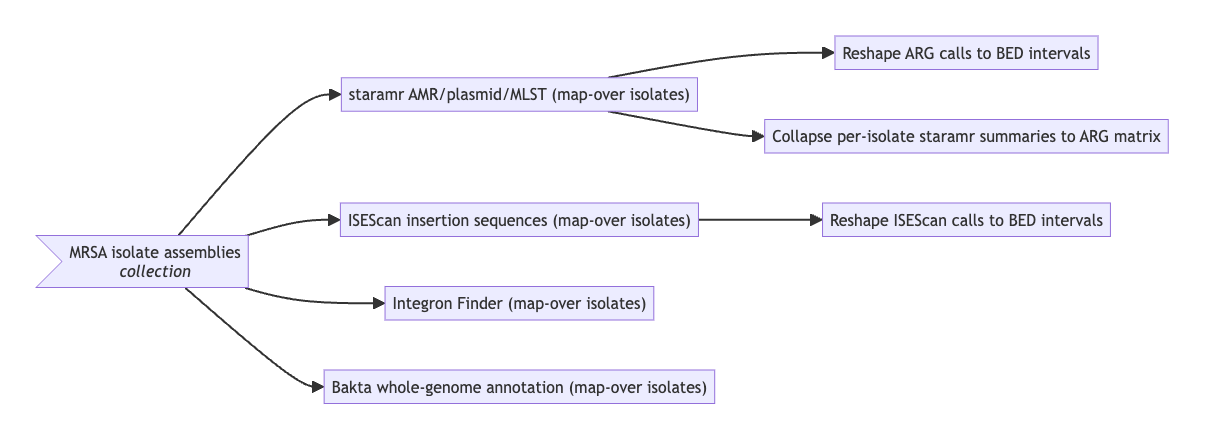
Example 1: Mobile Resistome
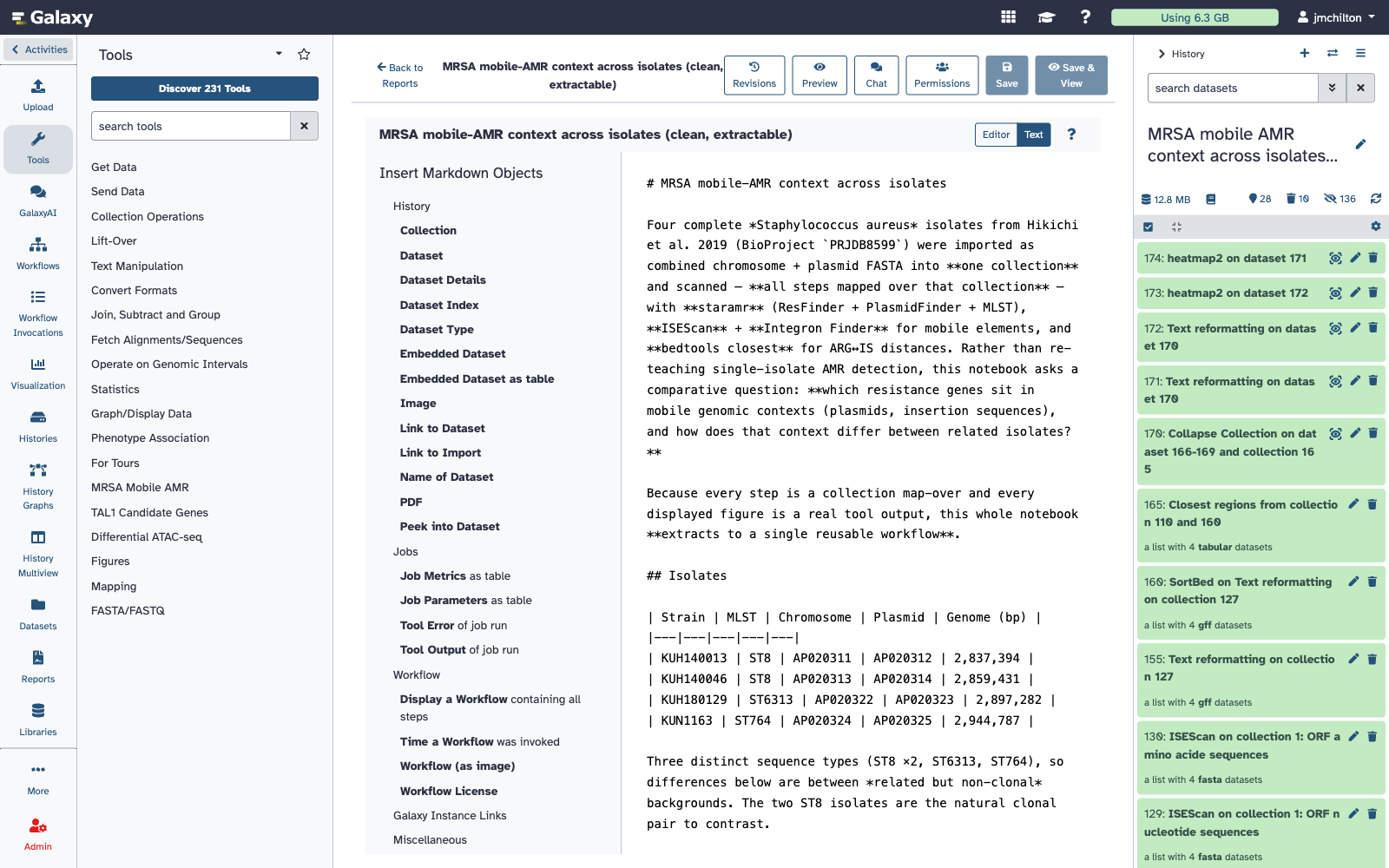
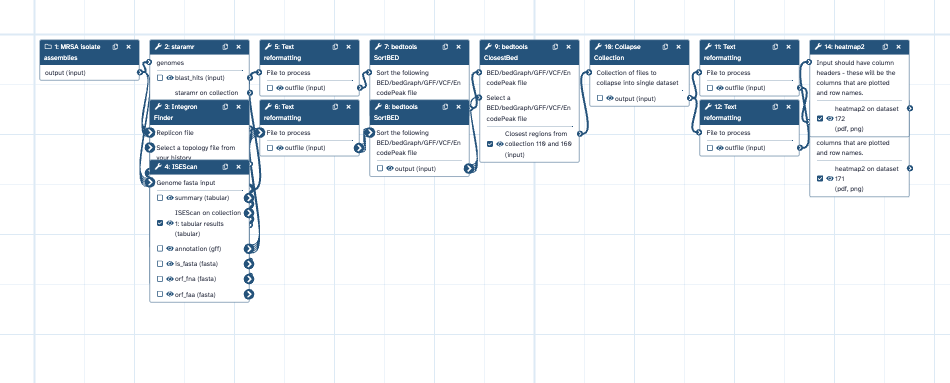
Backward extraction from a four-isolate Staphylococcus aureus notebook recovered a 14-step, sample-agnostic workflow.
- 8 collection map-over steps
- 9 workflow outputs
- 0 dangling inputs
- byte-identical re-run across all four isolates
History → Notebook → Workflow
Example 2: Differential ATAC-seq
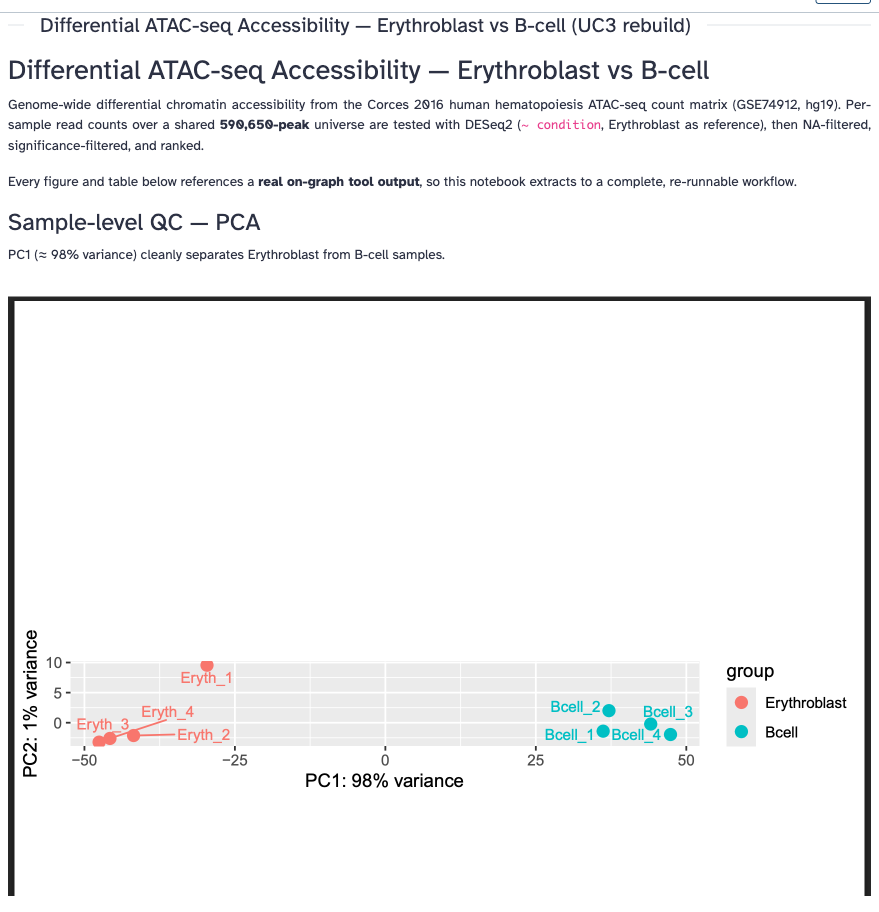
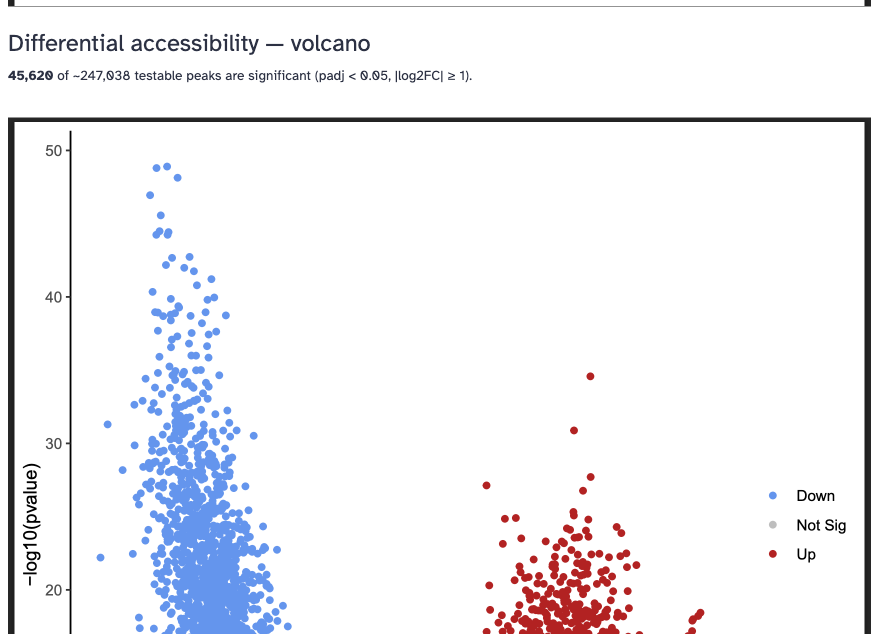
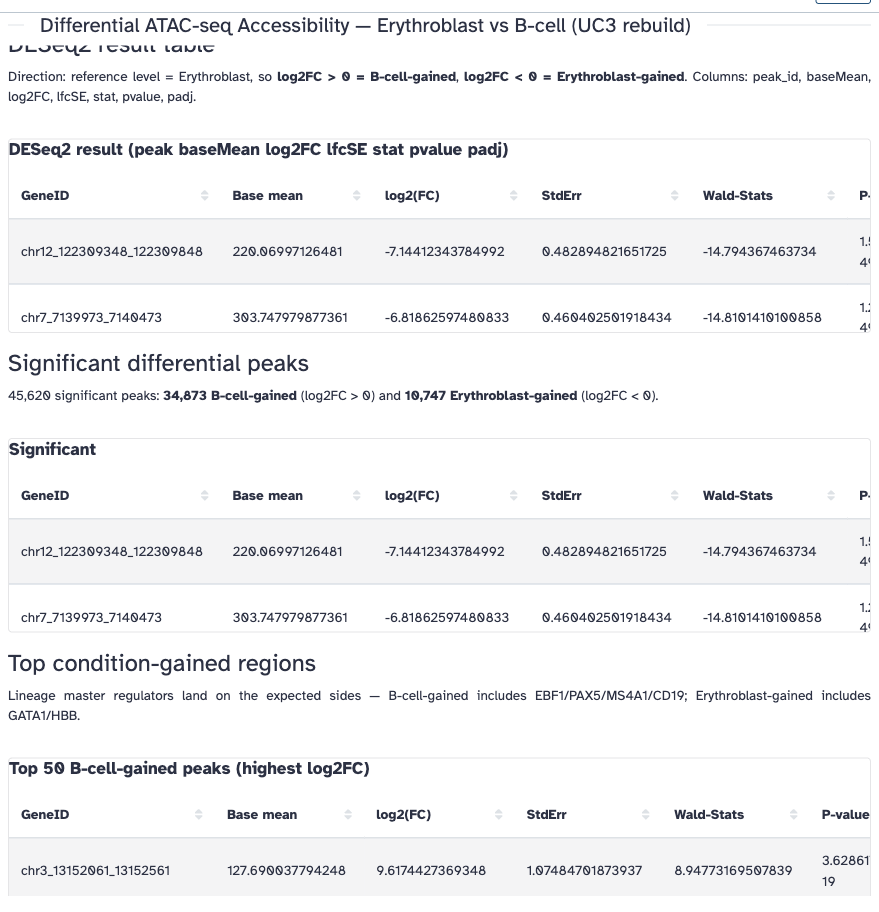
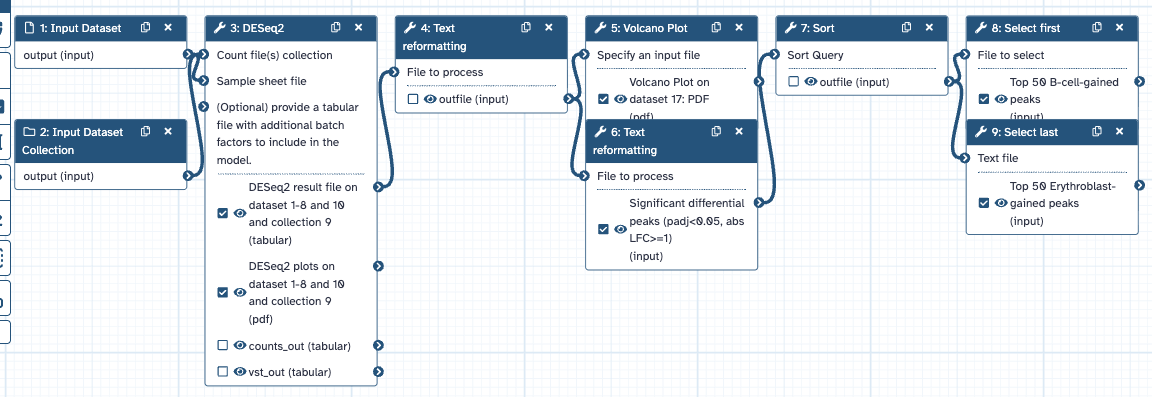
Count matrix + sample sheet → DESeq2 → NA-filter → volcano ∥ significance filter → sort → top gained / lost peaks.
- 9 extracted steps from a 590,650-peak universe
- 6 workflow outputs, 0 dangling inputs, 0 report repairs
- 45,620 significant peaks reproduced
- 34,873 B-cell-gained / 10,747 erythroblast-gained
Extraction Is Easier
Skill: reproduciblify
Don’t write the notebook and then extract the workflow by hand. Let an agent rebuild the history so extraction works.
Skill: workflow reports
After a workflow runs, turn the invocation into a report with the same reproducibility guarantees.
.ga file or a Galaxy workflow download with labels and marked outputs.Format 2 and gxwf: Schema-Aware Authoring and Validation of Galaxy Workflows
jmchilton.github.io/galaxy-brain/papers/gxwf/
nf-core/rnaseq
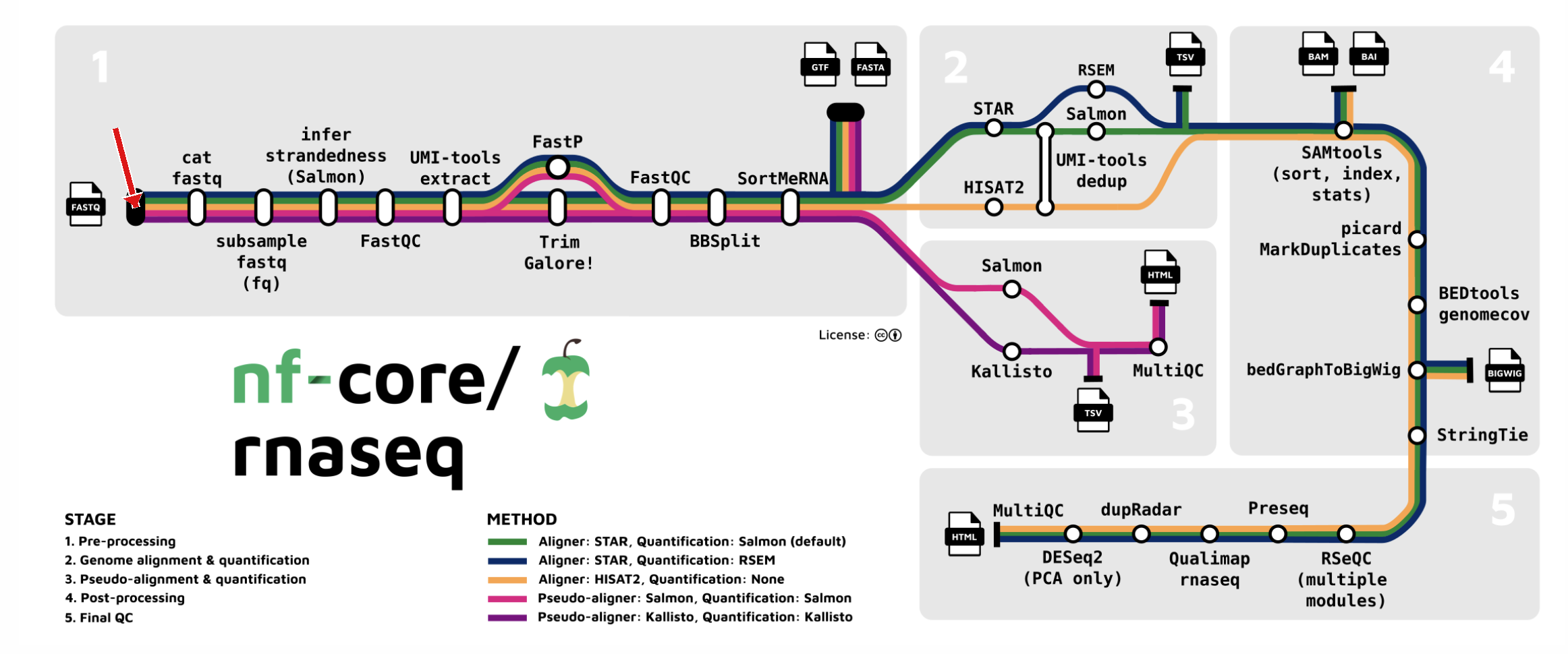
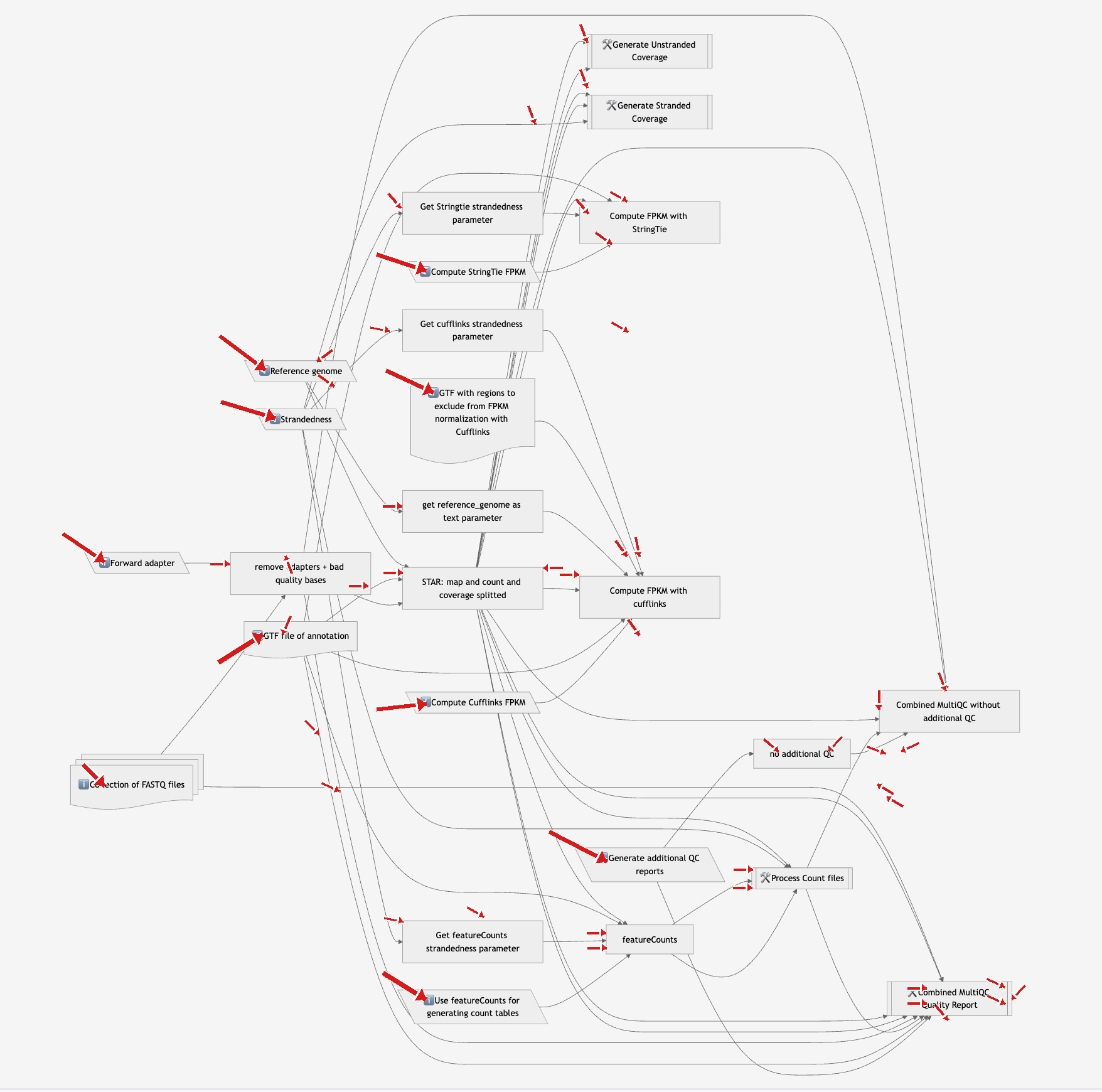
Format 2 + gxwf
Every workflow system validates something. Galaxy can validate the scientific tool invocation itself.
gxwf: one contract, two runtimes
A shared workflow-state specification and fixture suite keep the Python and TypeScript implementations converging.
@galaxy-tool-util/* packages feed the CLI, web UI, reports, and VS Code extension.Published CLI + docs
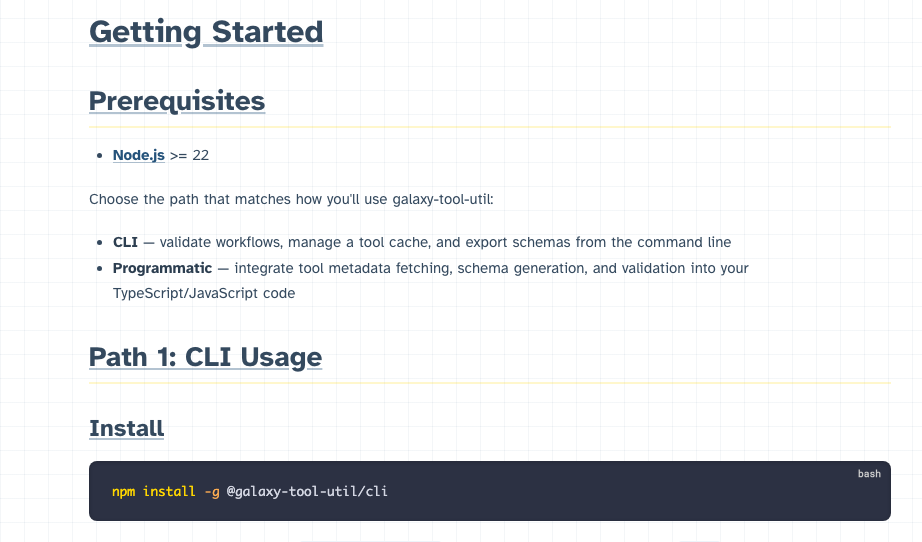
npm install -g @galaxy-tool-util/cli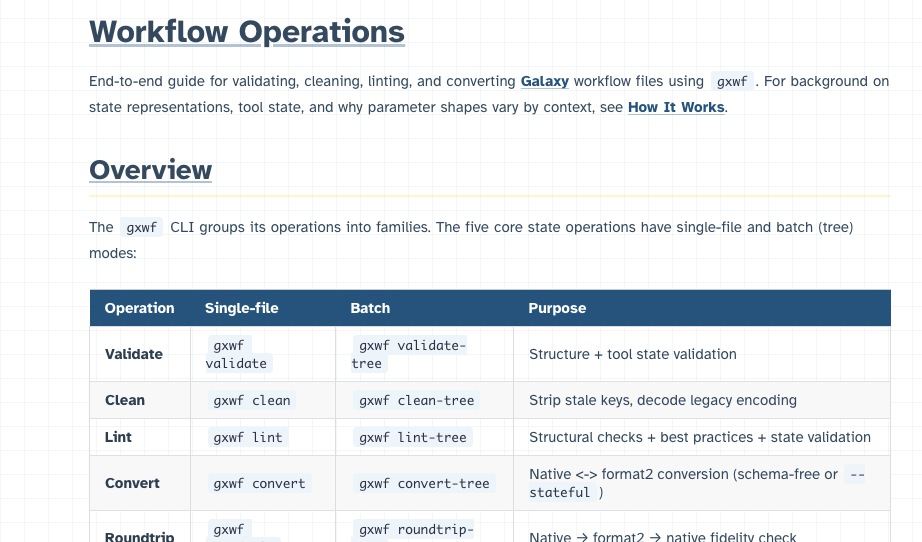
Tool state, validated
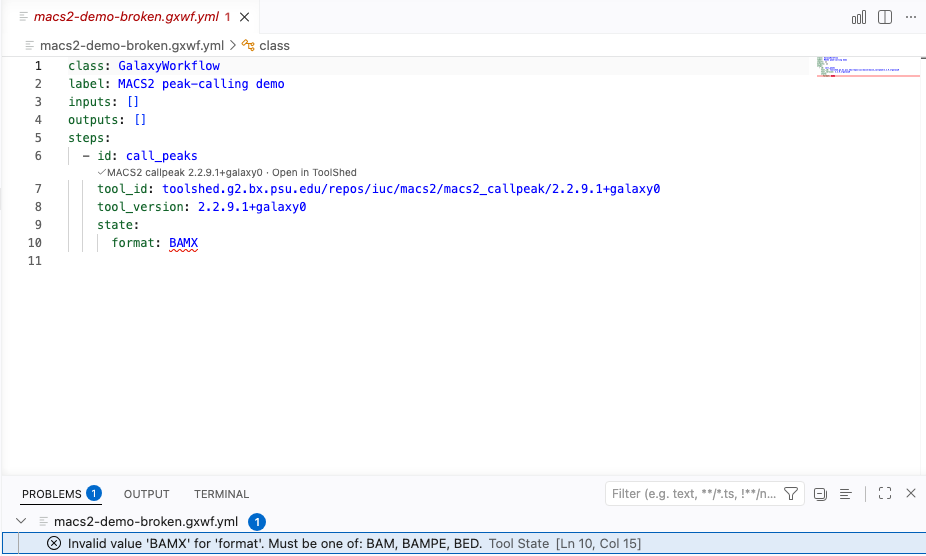
state:
  format: BAMX   # typo

$ gxwf validate wf.gxwf.yml
[0] call_peaks  FAIL
  format:
    expected "BAM" | "BAMPE" | "BED",
actual "BAMX"Connections, validated
Connections aren’t just producer→consumer links — they carry Galaxy’s collection algebra.
$ gxwf validate pe-artic-variation.ga \
      --connections

Tool state: 25 validated, 0 skipped
Connections: OK — 46 ok, 0 invalid, 0 skiplist wired into a single-dataset input implies map-over; an incompatible depth (e.g. list:paired → paired with no flatten) is rejected statically.galaxy-workflows-vscode
An IDE for Galaxy workflows
github.com/davelopez/galaxy-workflows-vscode
IDE work: find the tool
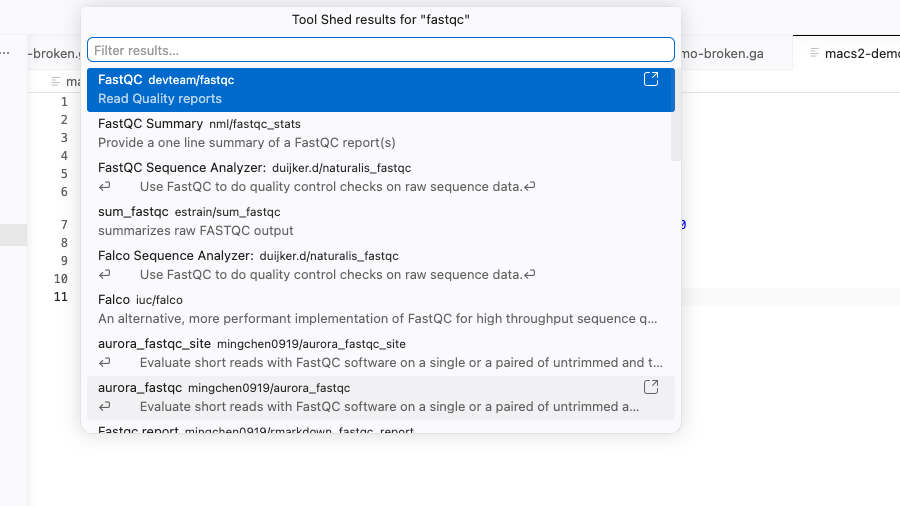
IDE work: complete state keys
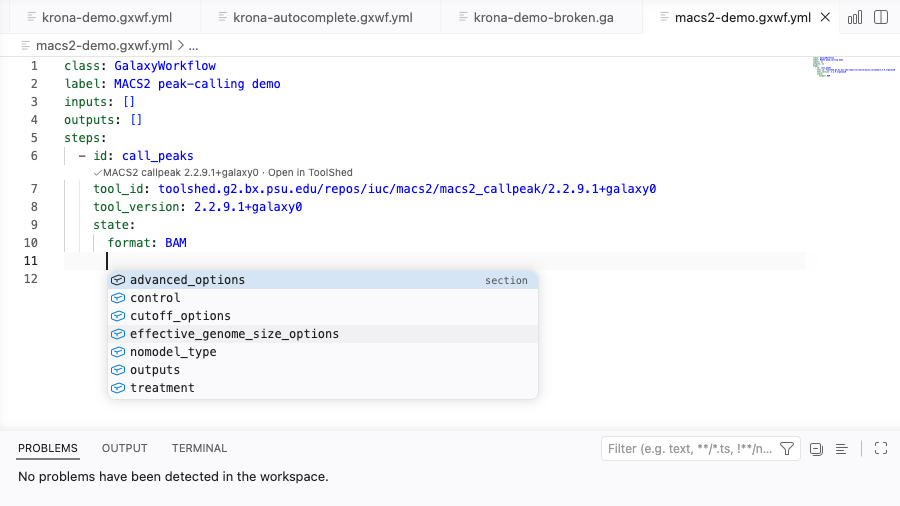
IDE work: complete legal values
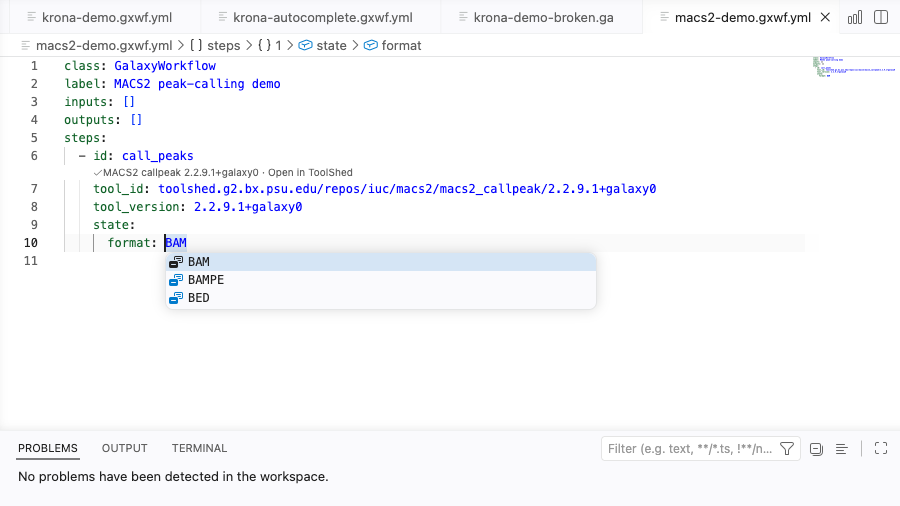
Format 2 is good for agents because it is good for humans
Galaxy Workflow Foundry: Compiling Curated Workflow Knowledge into Provenanced Agent Skills
jmchilton.github.io/galaxy-brain/papers/foundry/
Even when we ask agents to build workflows,
designing for humans supercharges agents.
Skills are the wrong source of truth
Galaxy Workflow Foundry
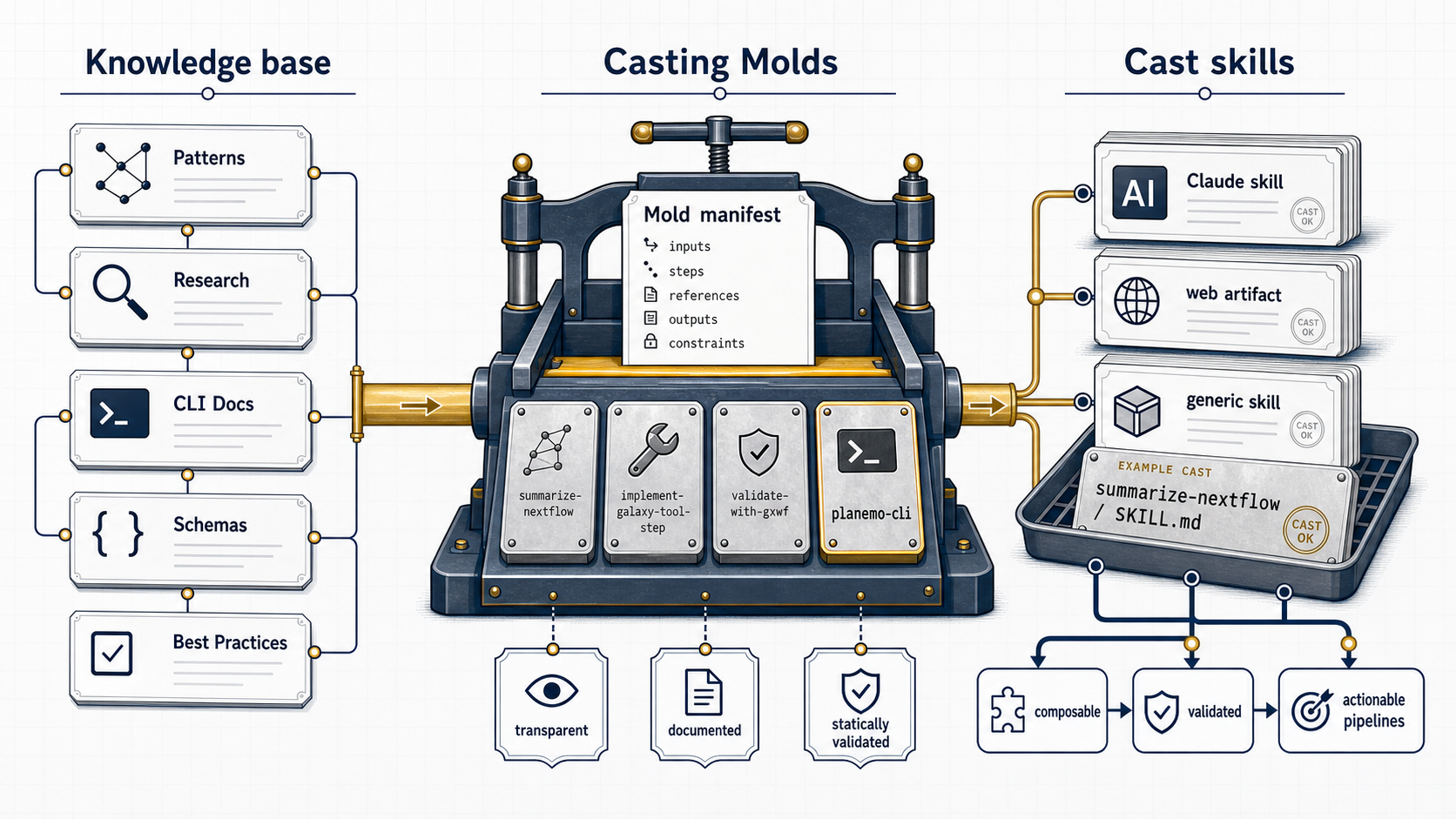 galaxyproject.github.io/foundry
Pipelines are journeys
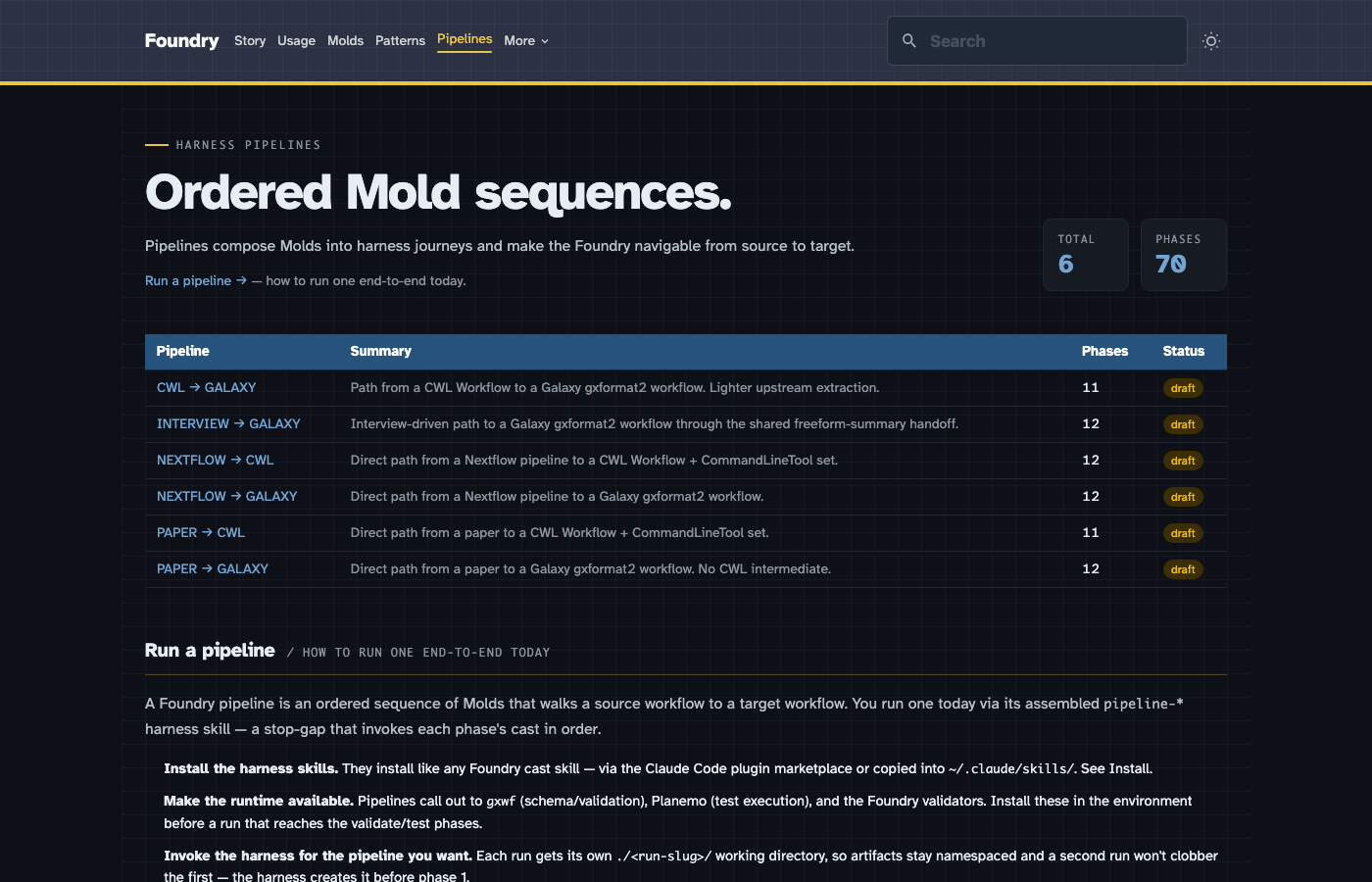
A pipeline is not a giant prompt. It is an ordered Mold sequence with visible handoffs.
- source-specific summary
- target-specific design briefs
- corpus comparison
- draft implementation loop
- tests, validation, execution, debug
Interview → Galaxy
advance-galaxy-draft-step until no drafty step remains.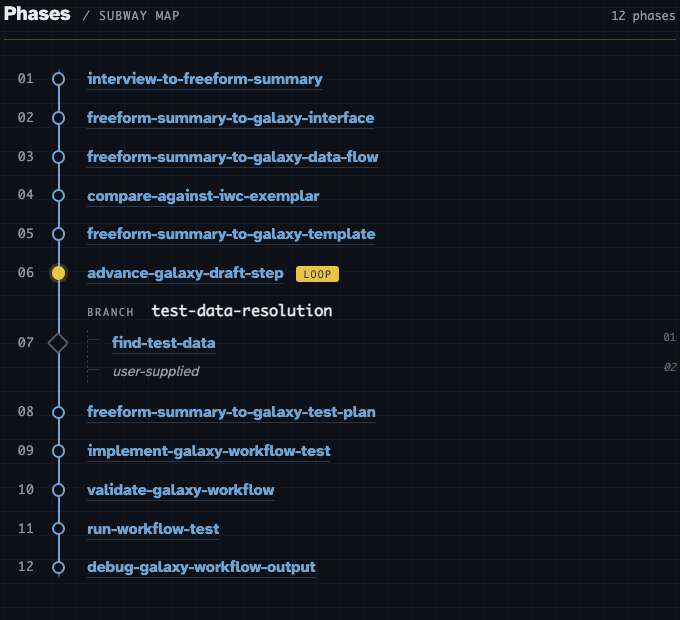
The same analysis, two directions
Example 2 extracted differential ATAC-seq from a completed run. A Foundry pipeline constructed the same analysis from the same initial prompt — no history, no execution.
%%{init: {'theme':'base','themeVariables':{'fontFamily':'Atkinson Hyperlegible','primaryColor':'#25537b','primaryTextColor':'#ffffff','primaryBorderColor':'#2c3143','lineColor':'#58585a','fontSize':'15px'}}}%%
graph LR
  input_0>"ATAC counts"]
  input_1>"sample metadata"]
  step_0["DESeq2 differential test"]
  step_1["Clean table (NA filter)"]
  step_2["Volcano plot"]
  step_3["Filter significant peaks"]
  step_4["Sort by log2FC"]
  step_5["Top gained peaks"]
  step_6["Top lost peaks"]
  input_0 --> step_0
  input_1 --> step_0
  step_0 --> step_1
  step_1 --> step_2
  step_1 --> step_3
  step_3 --> step_4
  step_4 --> step_5
  step_4 --> step_6
  classDef input fill:#edf4fa,stroke:#25537b,color:#2c3143;
  classDef core fill:#25537b,stroke:#2c3143,color:#ffffff;
  class input_0,input_1 input;
class step_0 core;- count matrix + sample sheet → DESeq2 → NA-clean → volcano ∥ filter → sort → top gained / lost
- every step a real, version-pinned Galaxy tool
tool_stateschema-validated offline bygxwf
Diagram emitted by gxwf mermaid from the pipeline’s output workflow.
Patterns are the reusable moves
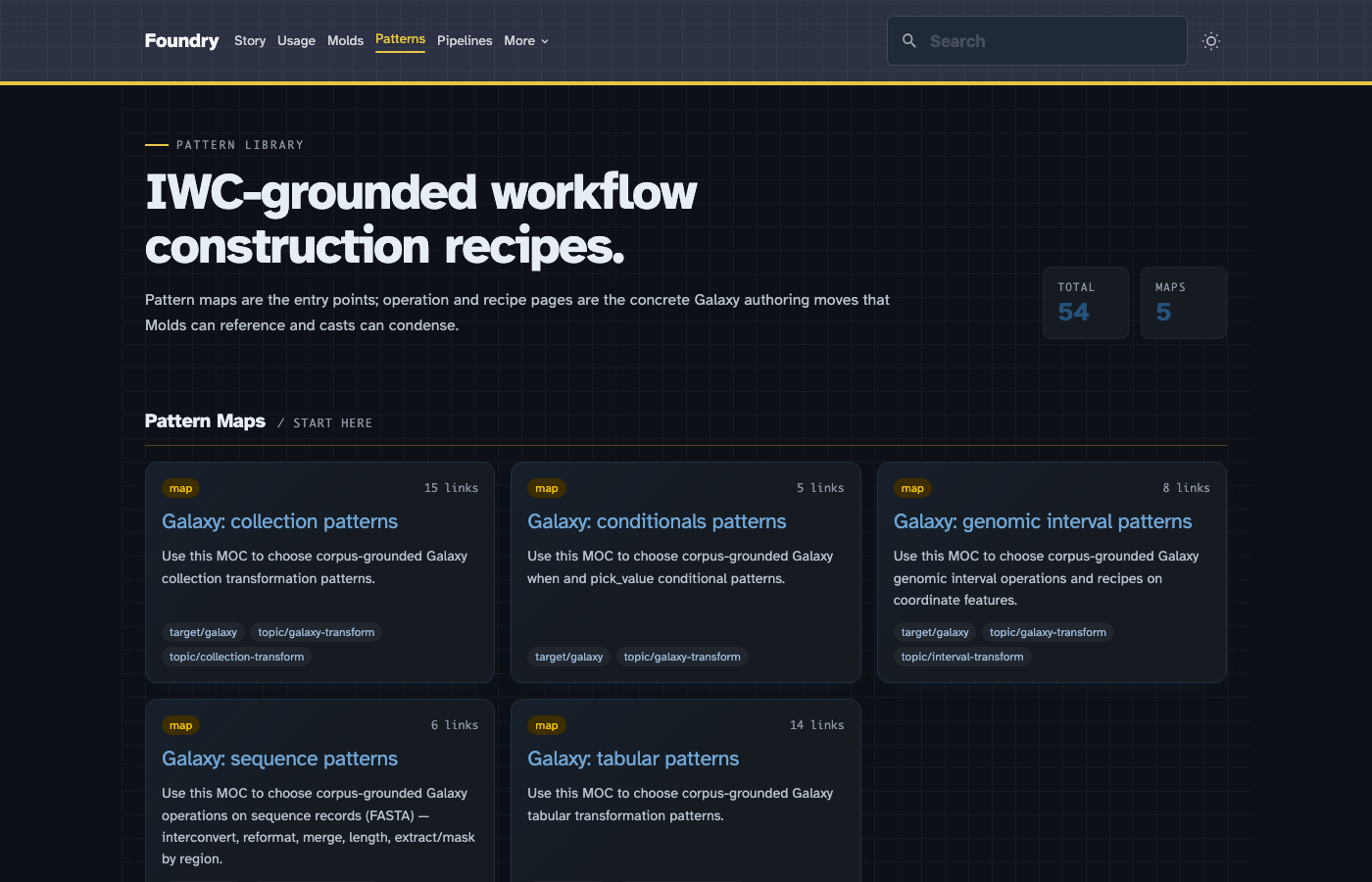
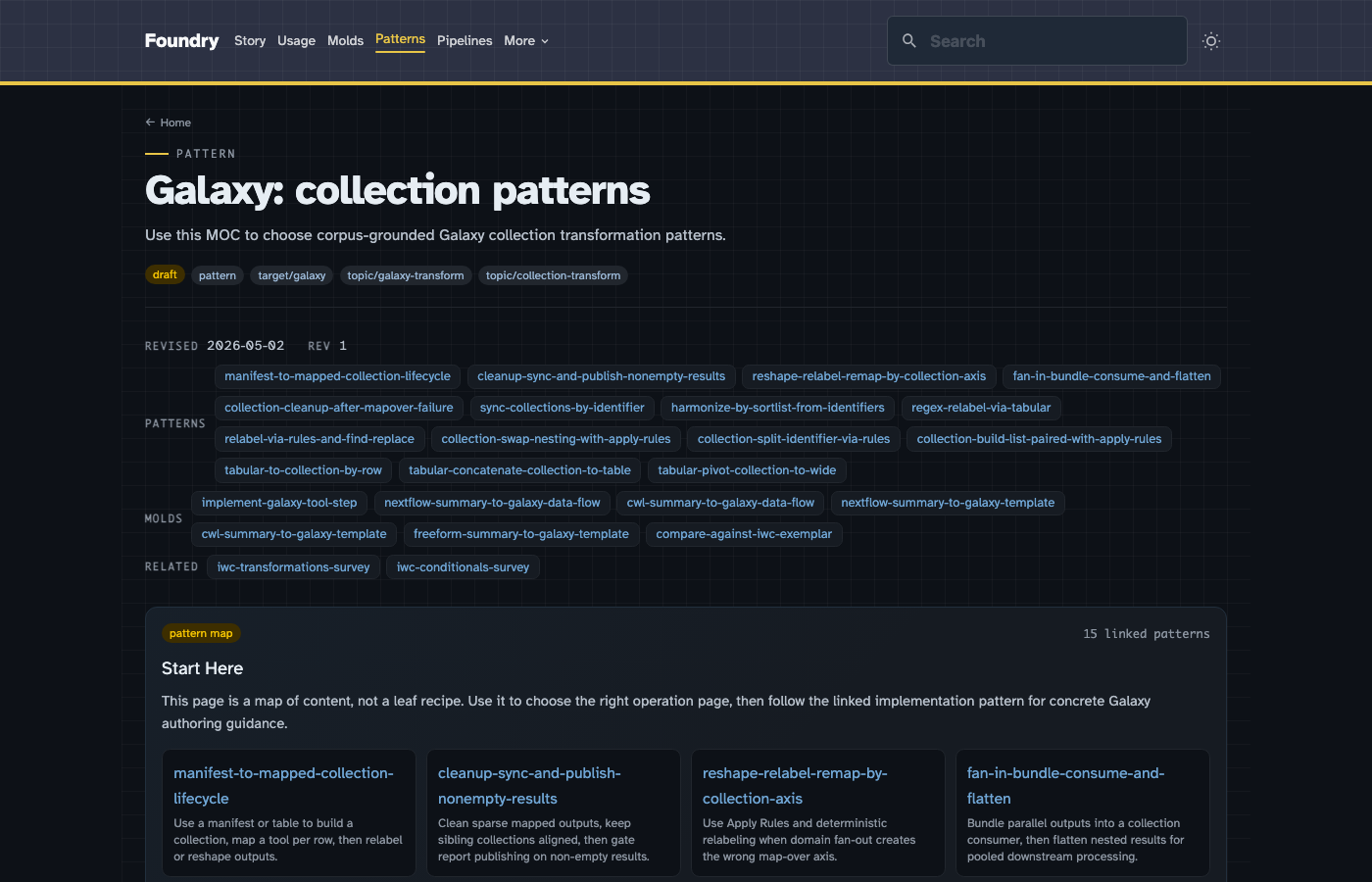
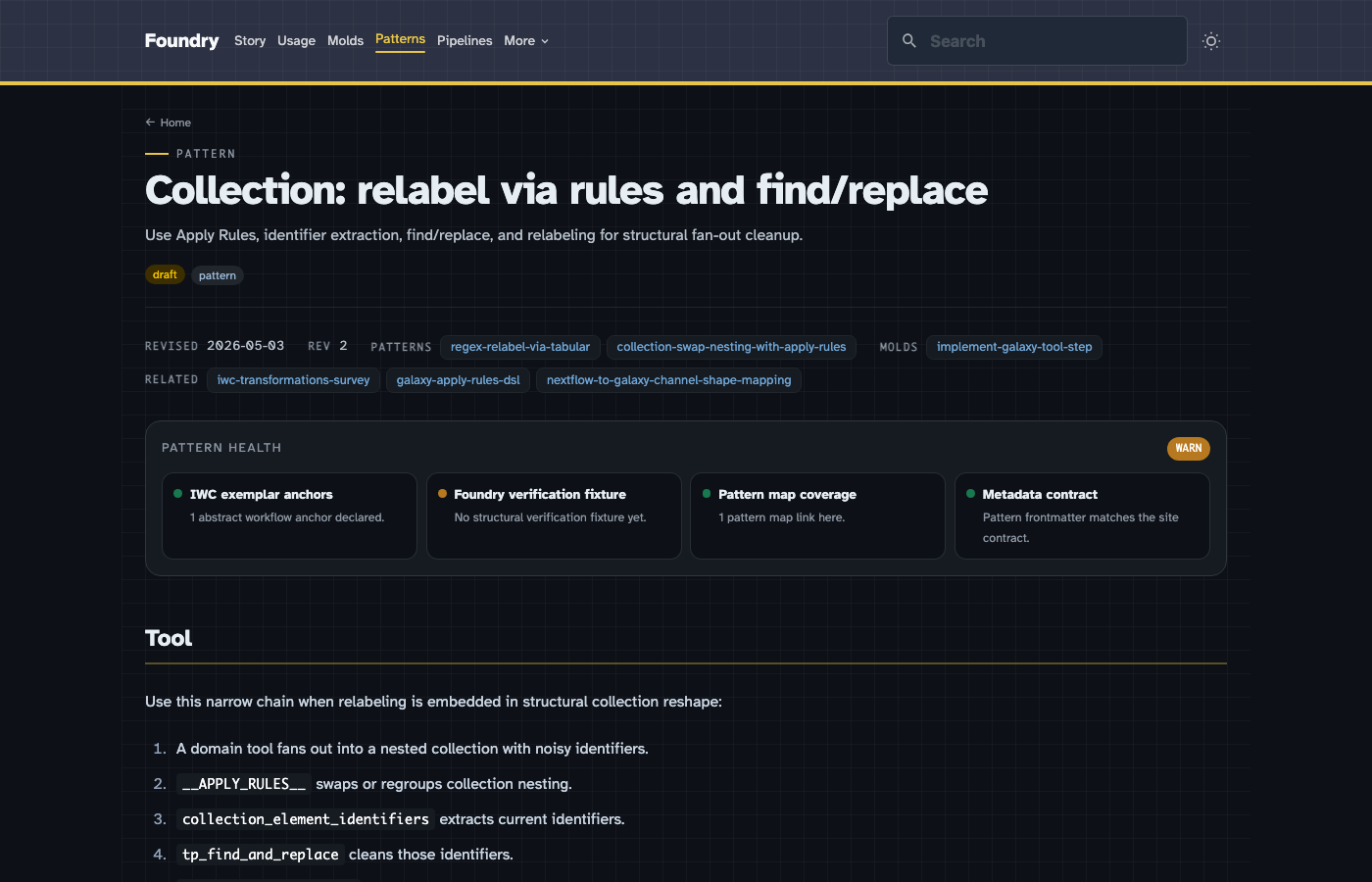
Structured Drafting of Workflows

Because reproducibility is more important than ever and designing reproducibility infrastructure for humans supercharges agents,
Galaxy must meet this moment by doubling down on our values.
Galaxy community
Nekrutenko lab
IWC
ToolShed contributors
Extra Slides
Galaxy Notebooks
Galaxy Notebooks: Galaxy-flavored markdown attached to histories.
- Embed datasets, collections, and interactive visualizations in prose (including drag and drop).
- Referenced outputs seed workflow extraction (with reports).
- AI assistant can read history context and draft sections (including MCP support).
- Every revision attributed: user / agent / restore.
Make the knowledge base executable
gxwf, Planemo, validator outputs, sidecar metadata.Workflow draft format
when: guardsTODO_* sentinels for tool IDs, versions, and wrapper-defined ports_plan_* fields tell the implementation Mold what the source evidence supports.class: GalaxyWorkflowDraft
inputs:
reads:
type: collection
collection_type: list:paired
steps:
align_reads:
tool_id: TODO_mapper
tool_version: TODO
_plan_context: "map paired reads to the reference"
_plan_in:
reads: "paired input collection"
reference: "selected genome"
in:
reads: reads
reference: TODO_reference_port
outputs:
aligned_bam:
outputSource: align_reads/TODO_bam_outputgxformat2 with no translation layer.Draft tooling: validate in the loop
tool_state, ports, IDs, versions, and remove planning fields.while gxwf draft-next-step workflow.gxwf.yml says draft:
invoke advance-galaxy-draft-step
gxwf draft-validate --concrete workflow.gxwf.yml
Agents need a tight workflow authoring loop
gxwf validate workflow.gxwf.yml
gxwf validate workflow.gxwf.yml --connections
gxwf draft-validate --concrete workflow.gxwf.yml

# error path -> targeted repair -> repeat