The Foundry Pattern

More Principled Skills for Agents and Humans
Galaxy ML Lab Meeting · August 13, 2026 · John Chilton
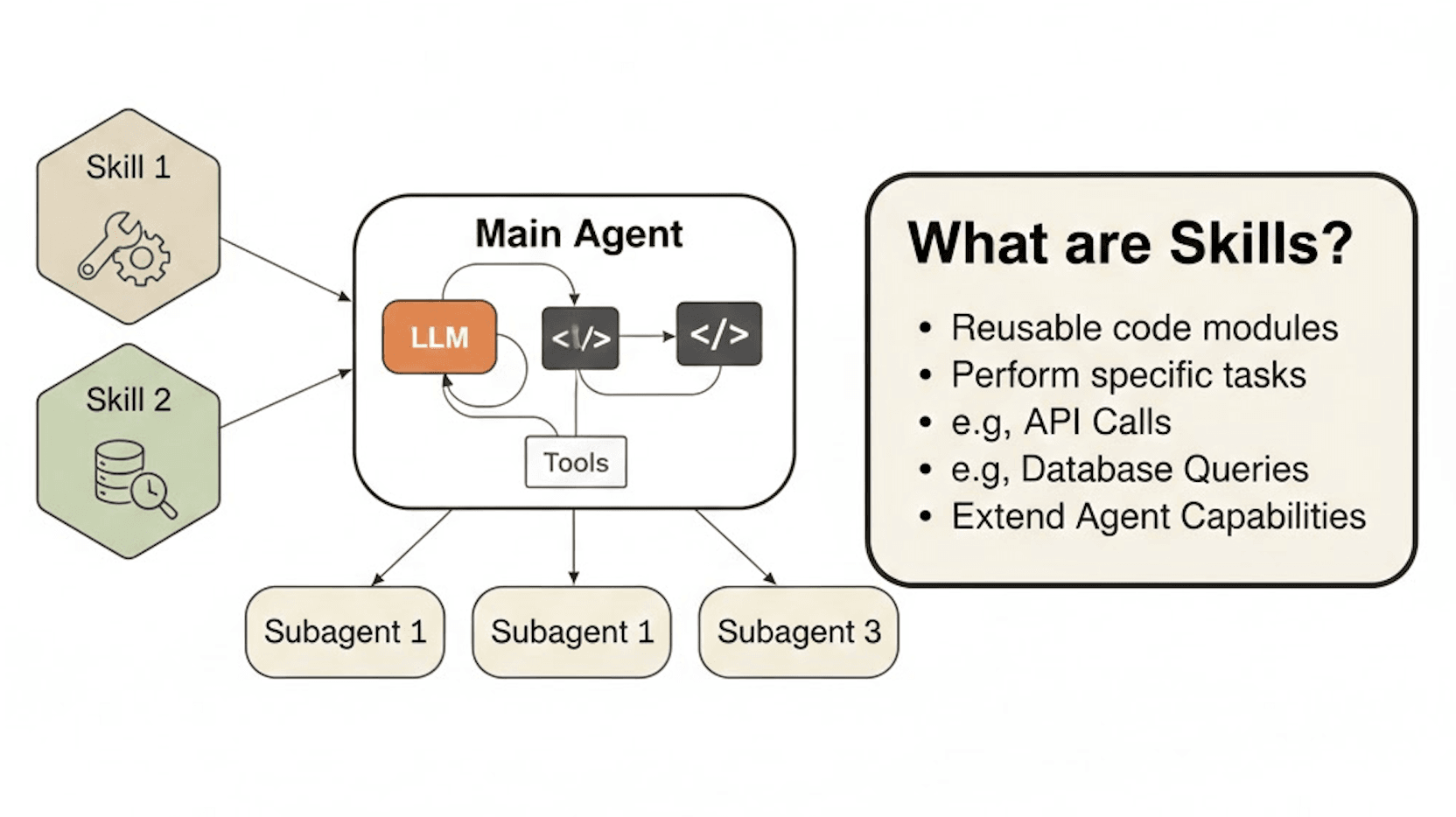
Diagram: Skill 1 and Skill 2 feeding a Main Agent (LLM, code blocks, Tools) that dispatches to three subagents, beside a panel headed 'What are Skills?' listing reusable code modules, perform specific tasks, API calls, database queries, extend agent capabilities
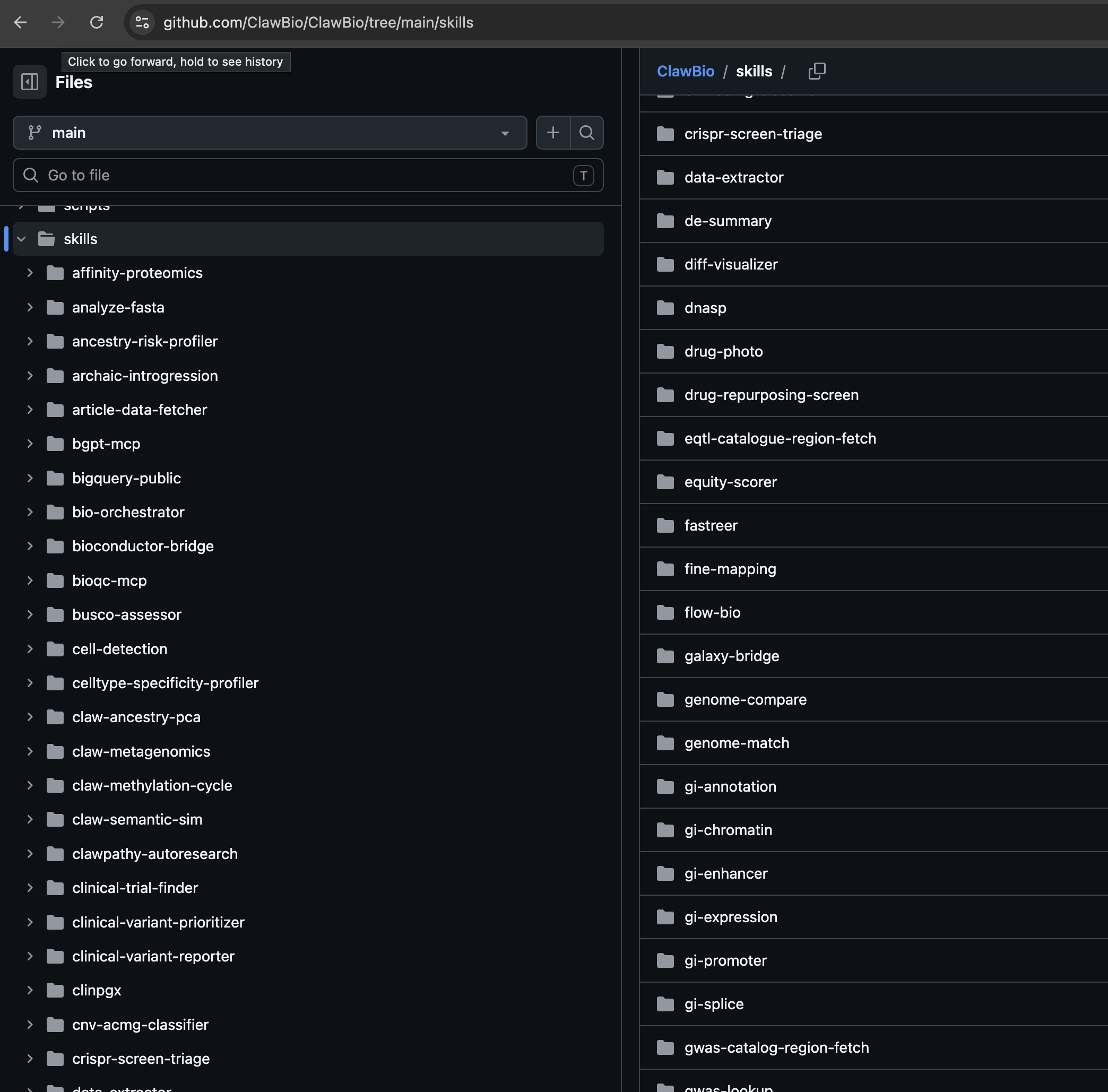
Screenshot of the ClawBio repository's large AI-generated skills directory on GitHub
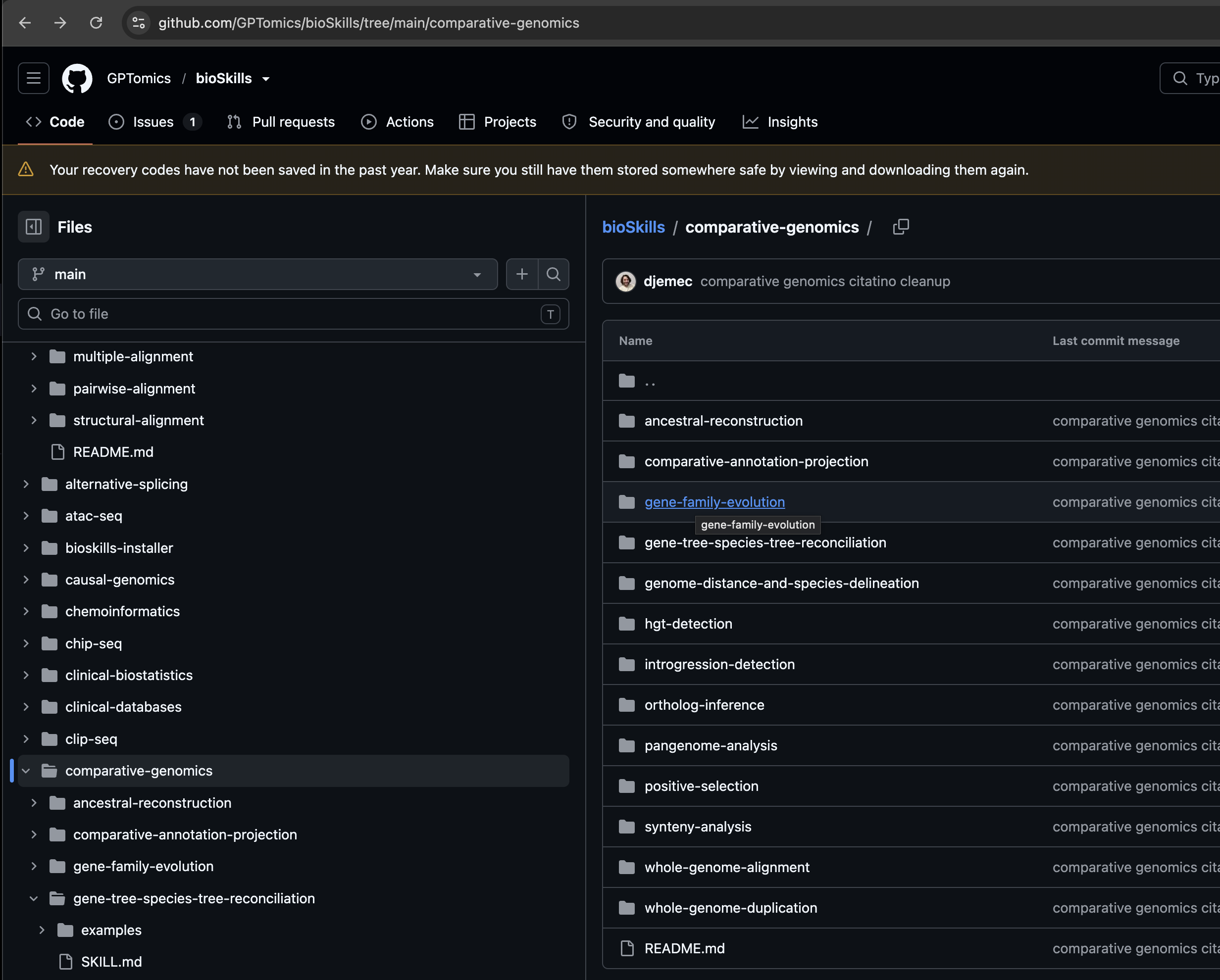
Screenshot of the bioSkills repository's AI-generated comparative genomics skill collection on GitHub
Part One

The Pattern

Authorship and distribution, kept separate.
foundry-pattern/pattern/the-model ↗
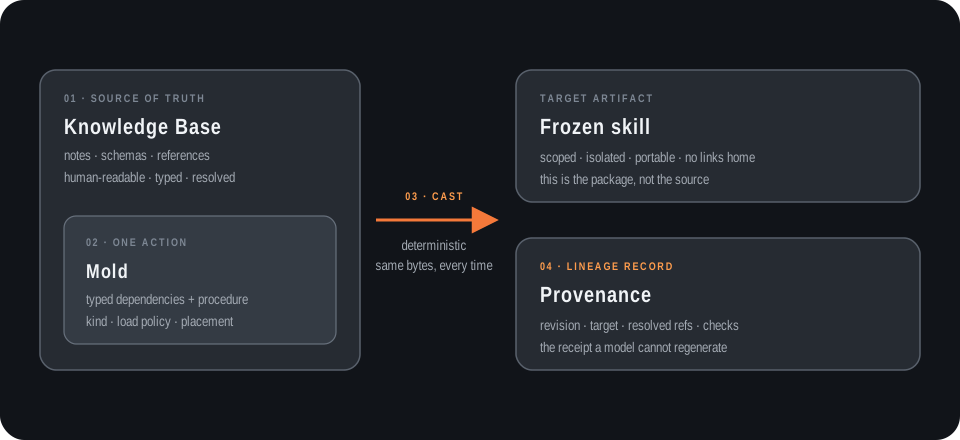
Diagram: a Knowledge Base of notes, schemas and references containing a Mold with typed dependencies, compiled by a deterministic cast into a frozen skill and a provenance record
People maintain the source. Agents receive small, frozen artifacts.
01 · Source of truth

Knowledge Base

Plain files, authored to be read and learned by a person.
typed frontmatter·controlled tags·wiki-linked references

Karpathy — llm-wiki.md ↗

02 · One action

Mold

A typed reference manifest plus a procedural skeleton.
Every declared reference carries three decisions:
kind
which resolver and casting rules apply
load policy
upfront, or on-demand with a trigger
placement
verbatim, or sidecar
03 · Compilation

Cast

Compile the references and procedure described by the Mold into a skill.
scoped
only what this action declares
isolated
links resolved away, no runtime tie
frozen
one revision, not future edits

The skill is never hand-maintained. Under-instructed? Fix the Mold and/or its references and cast again. Prefer thin Mold procedures and rich references to maximize reuse.

04 · Lineage record

Provenance

Which Mold revision. Which target. Which references resolved. Which checks ran.

Not “the model probably knew this” —
this claim is real, and here is where it came from.

The picture to hold

the skill
the binary
the KB
the code
casting
the compiler
provenance
the build log
Part Two

The Case

A skill should be the package, not the source.

Four arguments: engineering practice, scale, evidence, and resistance to rot.

foundry-pattern/case ↗
Part 2.1

An Argument from Engineering Practice

No serious engineering culture treats the compiled binary as the place you make changes.
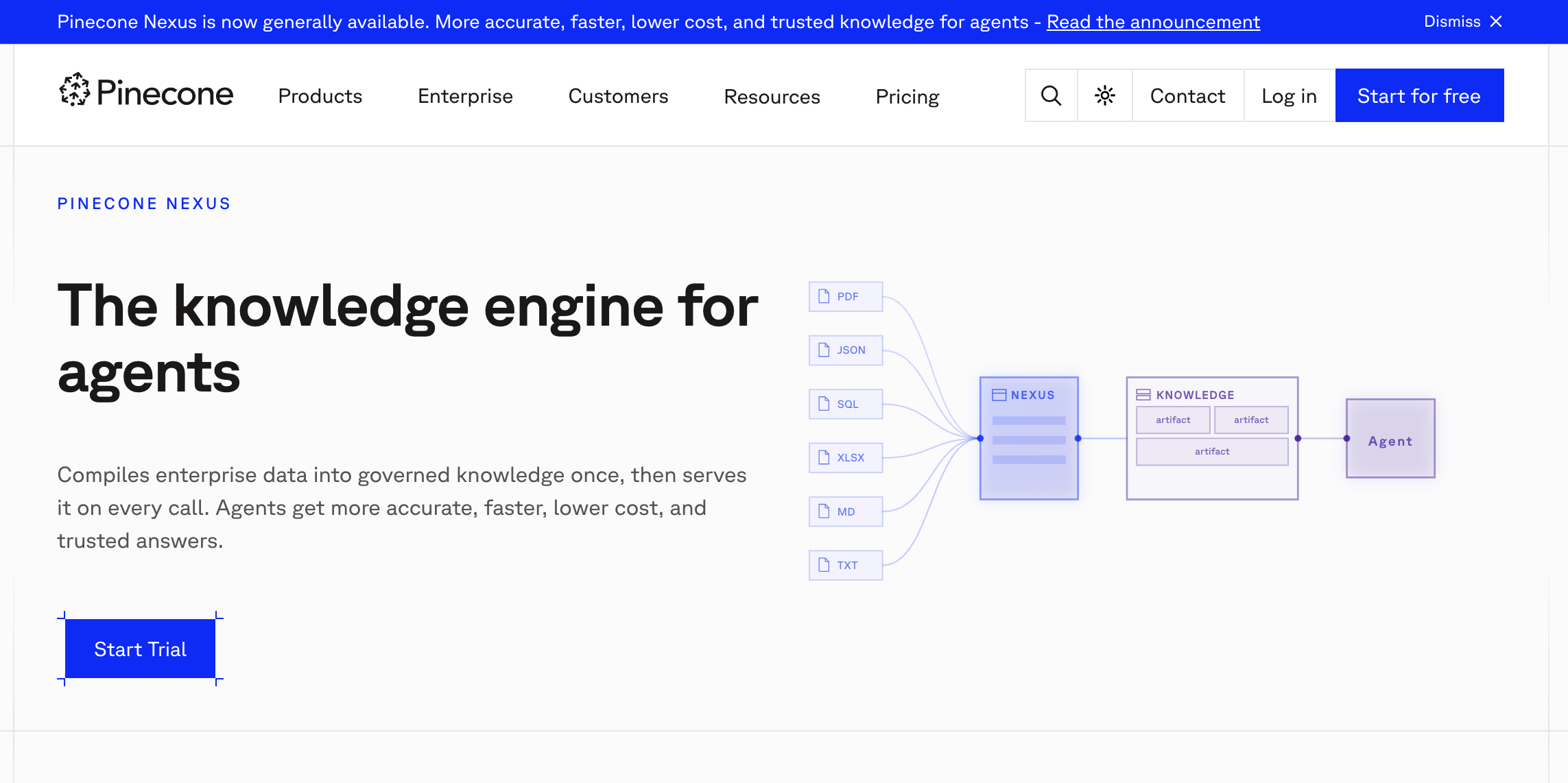
Screenshot of Pinecone Nexus presented as the knowledge engine for agents, compiling enterprise data into governed knowledge and serving it to agents
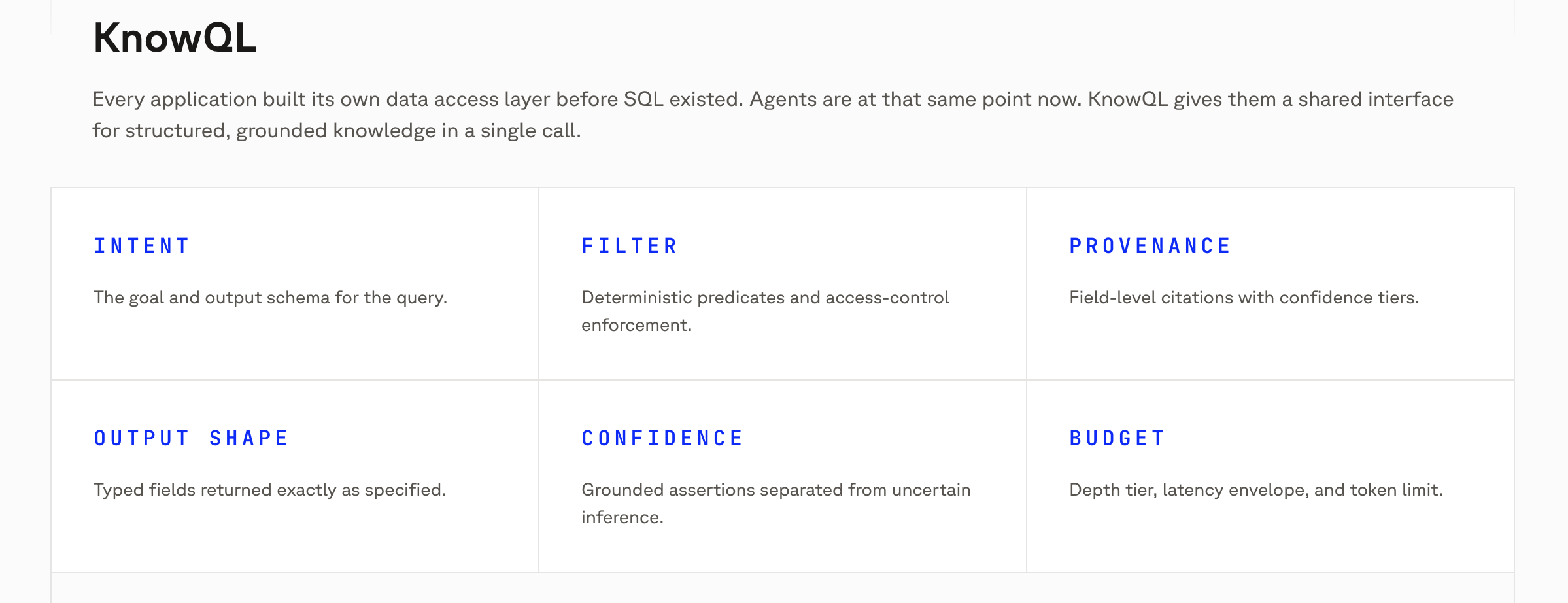
Screenshot of Pinecone KnowQL showing six agent knowledge-query concerns: intent, filter, provenance, output shape, confidence, and budget

The Foundry and Pinecone Nexus independently converge on the same diagnosis: agents need structured, governed, provenance-bearing knowledge—not raw retrieval reconstructed on every call. The Foundry bets on open-source artifacts; Nexus bets on an adapted runtime.

The Foundry work predates the Nexus announcement.
Pinecone Nexus and KnowQL

Part 2.2

An Argument from Scale

A circle representing all of human knowledge, with one person's education narrowing toward its boundary

All of human knowledge.

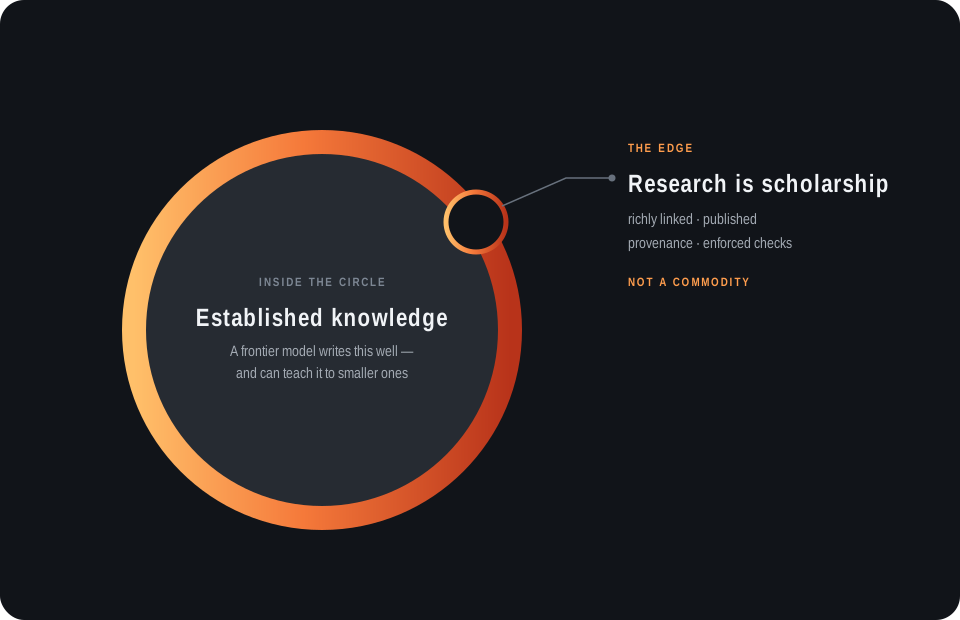
Inside the circle, AI generated skills without backing are mostly fine

Established knowledge. Canonical procedure.
A frontier model writes this skill well.

And the interior use has a job

advanced model
skill
simpler model
Teaching established knowledge to models that don’t carry it.

Spelling out the canonical pipeline is the difference between a small model doing the task and fumbling it.
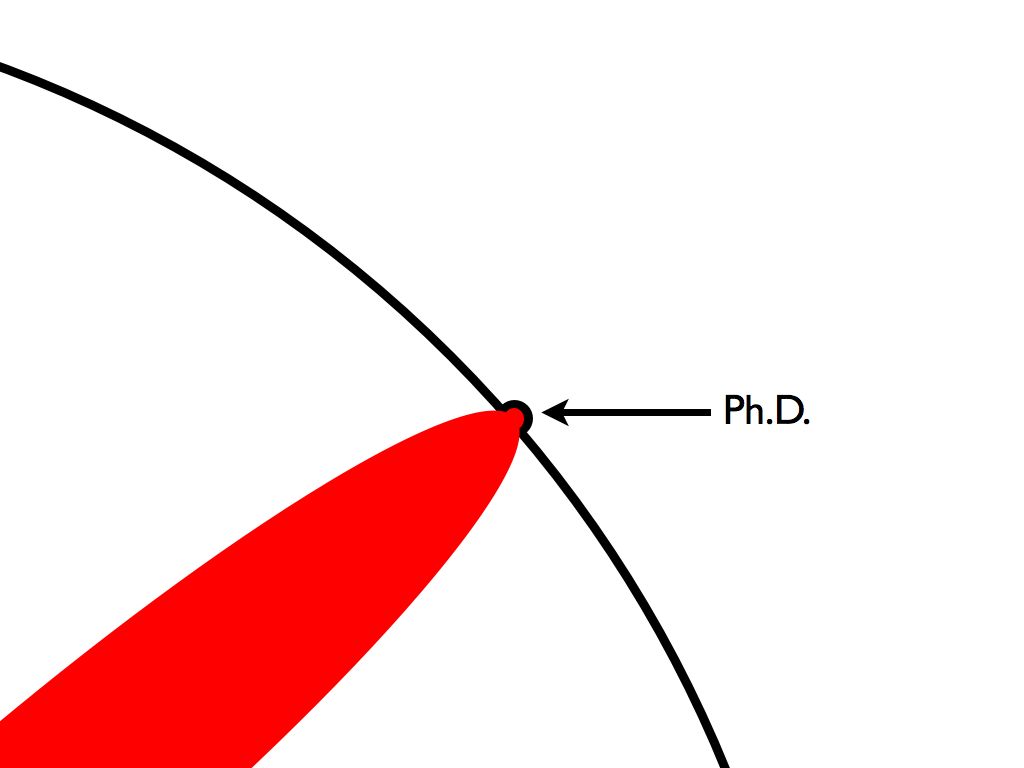
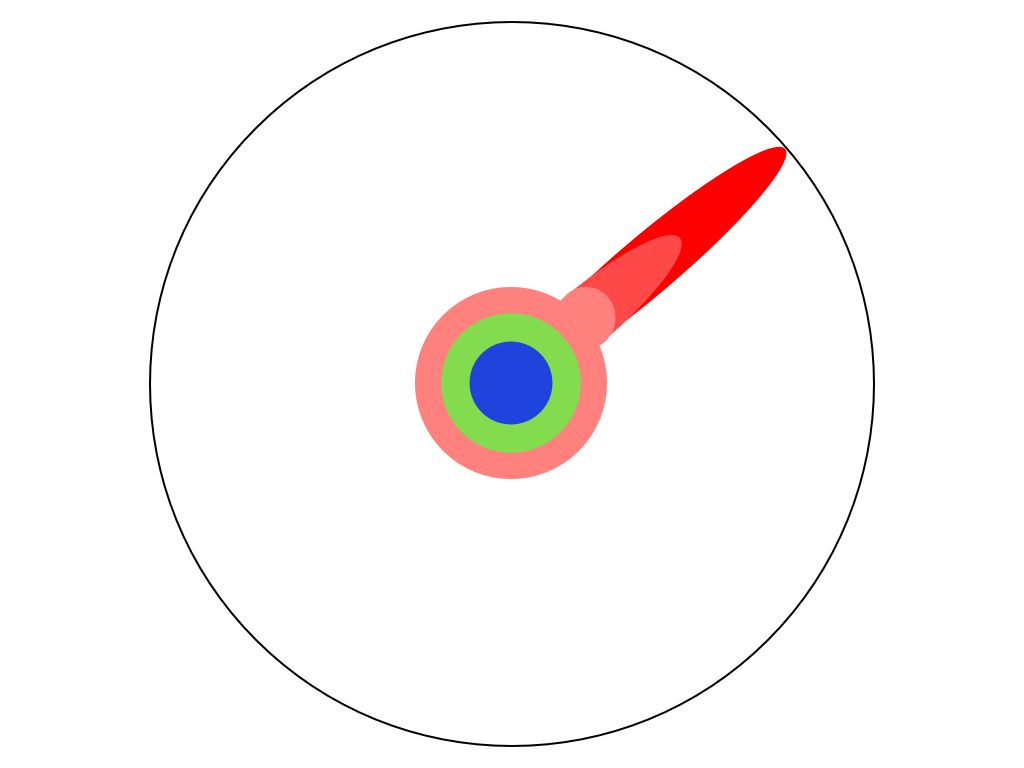
A close view of a small dent pushed beyond the boundary of the circle, labeled Ph.D.

Progress happens here.

A model is not another red shape.
The model is the circle.

Trained across the recorded surface — not educated into one human-sized slice.
The dent enlarged until the original circle is mostly outside the frame

At this scale, the world looks different.

Interior tools at the boundary

A folder of Markdown
a container, not an architecture
RAG
similarity is not dependency
One catch-all wiki
a generic ontology is not the domain’s
All three are useful. A Foundry may use all three. None is sufficient.
Diagram: the interior of the circle is established knowledge a frontier model writes well and can teach to smaller models; the glowing boundary band with a dent is the edge, where research is scholarship — richly linked, published, provenanced, and checked
The red dent at the edge of human knowledge, enlarged until the original circle is mostly outside the frame

A Foundry is
an attempt to
push that edge and make it
executable.

Part 2.3

An Appeal with Evidence

We didn’t assert it. We tried to falsify it.
Blind Regeneration — June 2026 ↗

Blind regeneration

Delete a science skill. Hand a frontier model only the topic and the format. How much of the original does it write back from memory?

A separate blind-author agent — never shown the original.
Hard prohibition: no reading the corpus, no web search.
Two skills at different altitudes: one light and procedural, one decision-grade.
Designed so it could fail. High overlap ⇒ the restatement is redundant.

It wrote the skill back

Canonical spine + default parameters
reproduced verbatim
PCA n_comps=50 · n_neighbors=15 · resolution 0.2–2.0 · Leiden over Louvain
The decision-grade page
85–90% recovered, roughly a wash
The light page
the blind version was better
The redundancy effect is strongest exactly where corpora are thickest.

It reproduced the citations too

From the weights. Including the fuzzy ones.

You cannot tell, from the output,
which of those are correct.

A real citation and a confabulated one look identical on the page.
A smarter model produces more convincing unverifiable citations, not more verifiable ones.

And it added more validity caveats than the original

We expected it to be thinner on rigor. It volunteered cautions the original never mentioned.
So validity knowledge is already in the weights.

The two things it could not supply

Provenance
the universal asset
Which claim is real, and where it came from. Rides with every cast, in every domain.
An enforced check
realized per domain
An external verdict between authored knowledge and a trusted result — not an optional caveat.

Restating canonical knowledge is a commodity.
Traceable, check-backed knowledge is not.

Part 2.4

The Case for Resisting Rot

The generated skill is
the perishable layer.

The better blind version is the clue: generated skill quality rises with model capability.
Who cares what Opus 4.6 wrote after Opus 5 ships?

A skill frozen in place inherits the limits of the model that authored it.
Keep the source, and recast.

Targets change the package, not the source

One Mold → Claude skill, generic agent, baked-in prompt.

Agent platforms will change faster than the domain knowledge they consume.
Binding source knowledge to today’s packaging format makes it inherit the platform’s lifetime.

Part Three

An Implementation

One concrete Astro stack. The pattern does not require it.
foundry-pattern/pattern/standing-up-a-foundry ↗
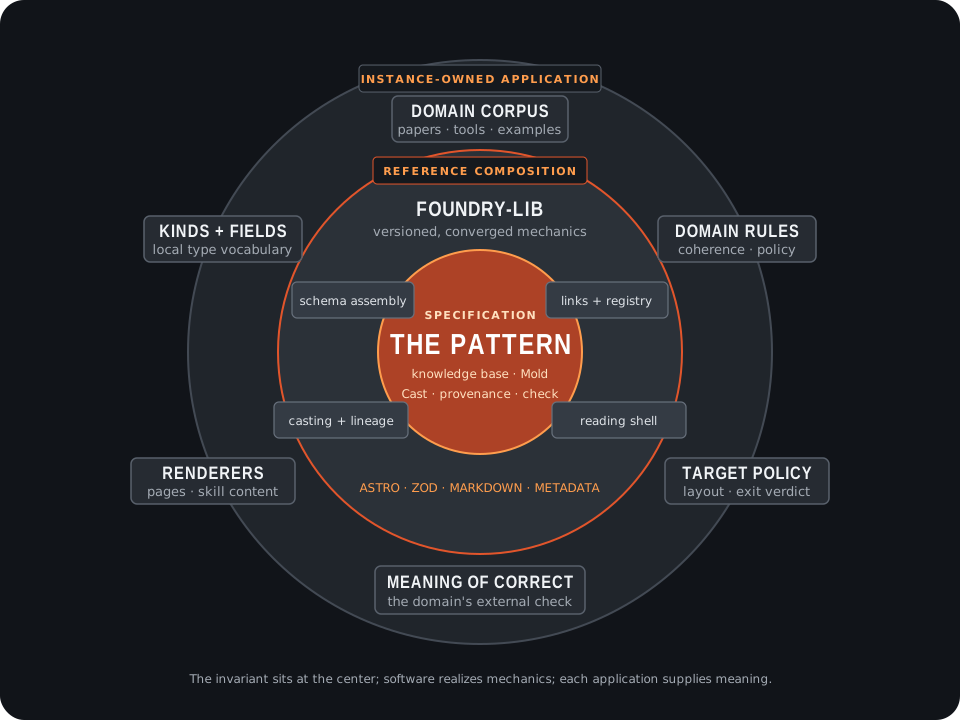
Concentric diagram: the Foundry Pattern specification at the center, foundry-lib and the Astro reference composition around it, and instance-owned domain knowledge and application decisions around the outside

You can use the pattern without foundry-lib

Guiding Principles
Ground → Explain → Cast → Check. The domain-free commitments.
Plan Your Foundry
A stack-neutral route from a bounded domain to one working vertical slice.
Design Records
Keep vocabulary, architecture, content contracts, ownership, and build knowledge inside the KB.
Start with commitments, sequence, and self-documentation—not a particular library.

One concrete implementation: Astro + foundry-lib
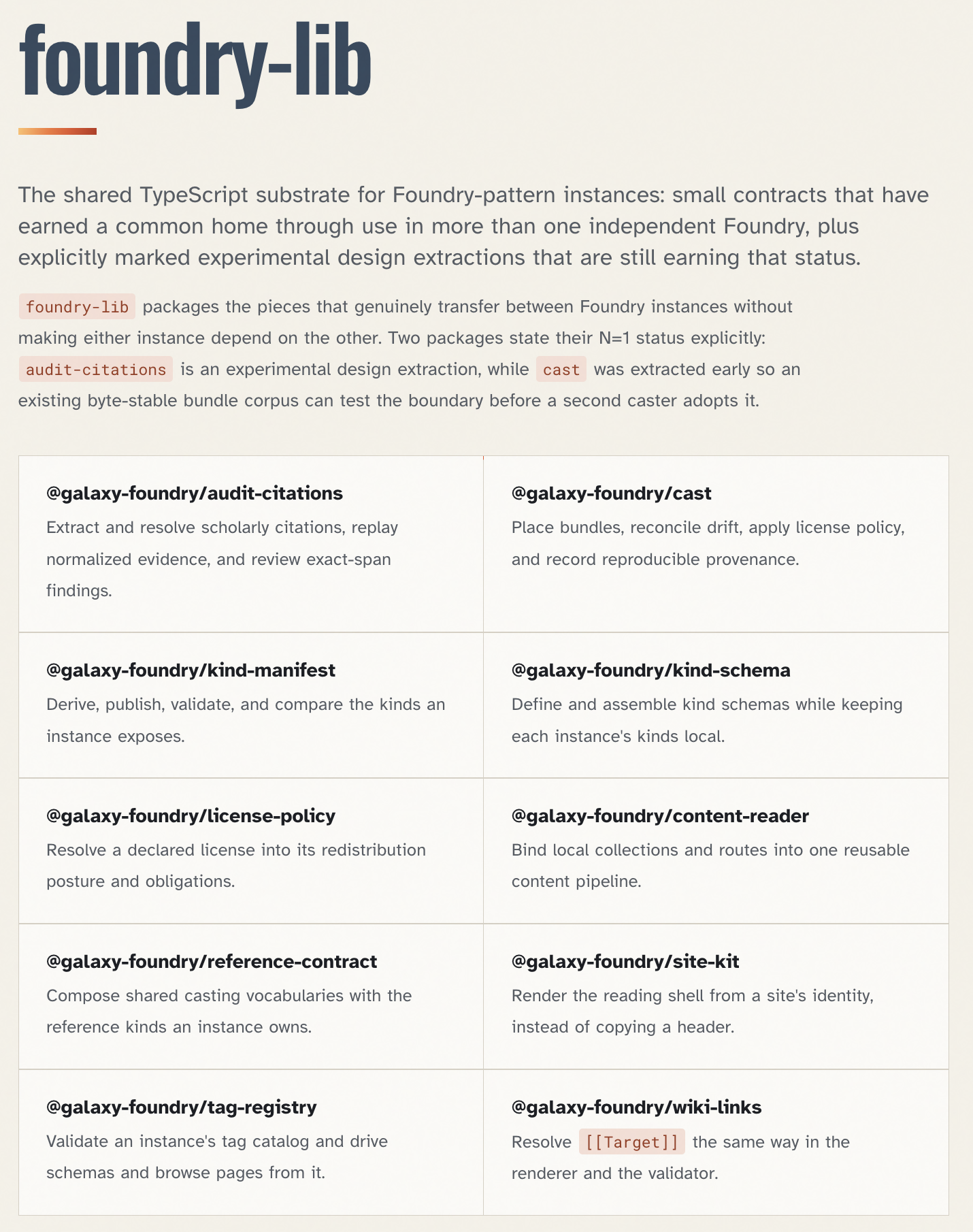
The instance owns
domain knowledge · kinds · vocabularies · renderers · targets · acceptance policy
The Astro stack composes
Markdown content · Astro · TypeScript + Zod · Vitest · GitHub Pages
foundry-lib shares
schemas · links · registries · reader shell · casting and provenance mechanics
Share converged mechanics. Keep domain meaning local.
Screenshot of the foundry-lib documentation showing the shared TypeScript packages extracted from multiple independent Foundry implementations
One huge prompt

Bootstrap the whole Astro stack
with an agent.

STANDING UP A FOUNDRY — WORKING CHECKLIST

vocabulary → reader + contracts → registries + validation + CI
→ corpus → Molds → Cast → external check

Versions, paths, packages, tests, handoffs, and stopping conditions—
enough to build the first reviewable vertical slice.

foundry-pattern/pattern/standing-up-a-foundry ↗
Part Four

The Workflow Foundry

The original implementation.
Galaxy Workflow Foundry profile ↗
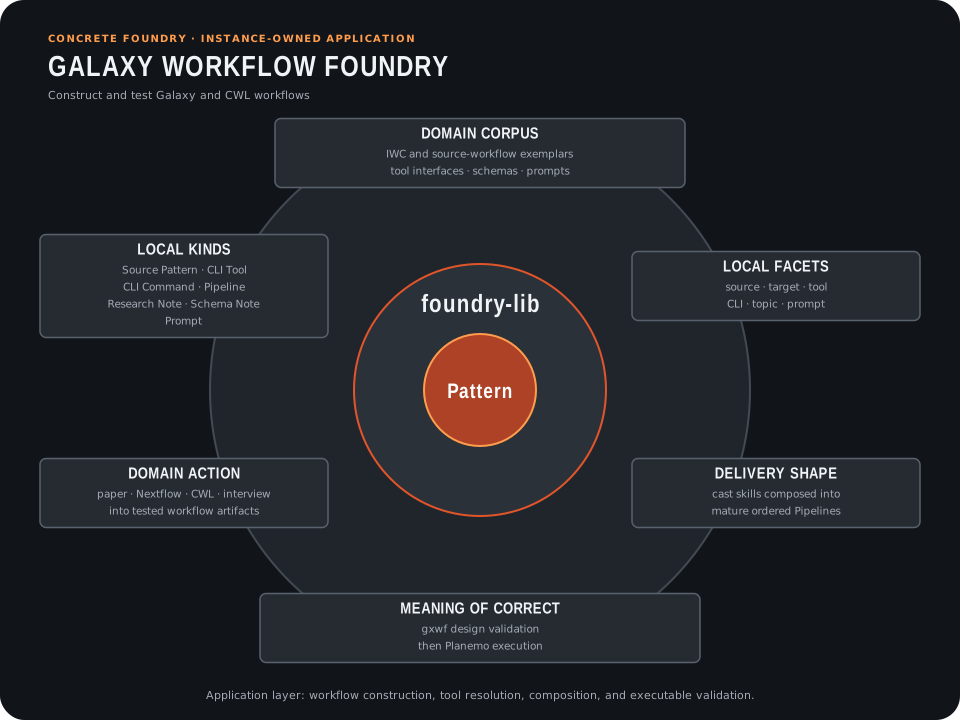
Galaxy Workflow Foundry responsibility rings showing workflow sources, local kinds and facets, workflow construction, cast Pipelines, and executable validation around the shared Pattern and foundry-lib core

The same analysis, two directions

Example 2 extracted differential ATAC-seq from a completed run. A Foundry pipeline constructed the same analysis from the same initial prompt — no history, no execution.

%%{init: {'theme':'base','themeVariables':{'fontFamily':'Atkinson Hyperlegible','primaryColor':'#25537b','primaryTextColor':'#ffffff','primaryBorderColor':'#2c3143','lineColor':'#58585a','fontSize':'15px'}}}%%
graph LR
  input_0>"ATAC counts"]
  input_1>"sample metadata"]
  step_0["DESeq2 differential test"]
  step_1["Clean table (NA filter)"]
  step_2["Volcano plot"]
  step_3["Filter significant peaks"]
  step_4["Sort by log2FC"]
  step_5["Top gained peaks"]
  step_6["Top lost peaks"]
  input_0 --> step_0
  input_1 --> step_0
  step_0 --> step_1
  step_1 --> step_2
  step_1 --> step_3
  step_3 --> step_4
  step_4 --> step_5
  step_4 --> step_6
  classDef input fill:#edf4fa,stroke:#25537b,color:#2c3143;
  classDef core fill:#25537b,stroke:#2c3143,color:#ffffff;
  class input_0,input_1 input;
  class step_0 core;
  • count matrix + sample sheet → DESeq2 → NA-clean → volcano ∥ filter → sort → top gained / lost
  • every step a real, version-pinned Galaxy tool
  • tool_state schema-validated against the Tool Shed by gxwf

Diagram emitted by gxwf mermaid from the pipeline’s output workflow.
Extraction needs a completed run; construction needs only the intent. Both land on the same kind of validated, reproducible workflow.
GCC 2026 source slide ↗
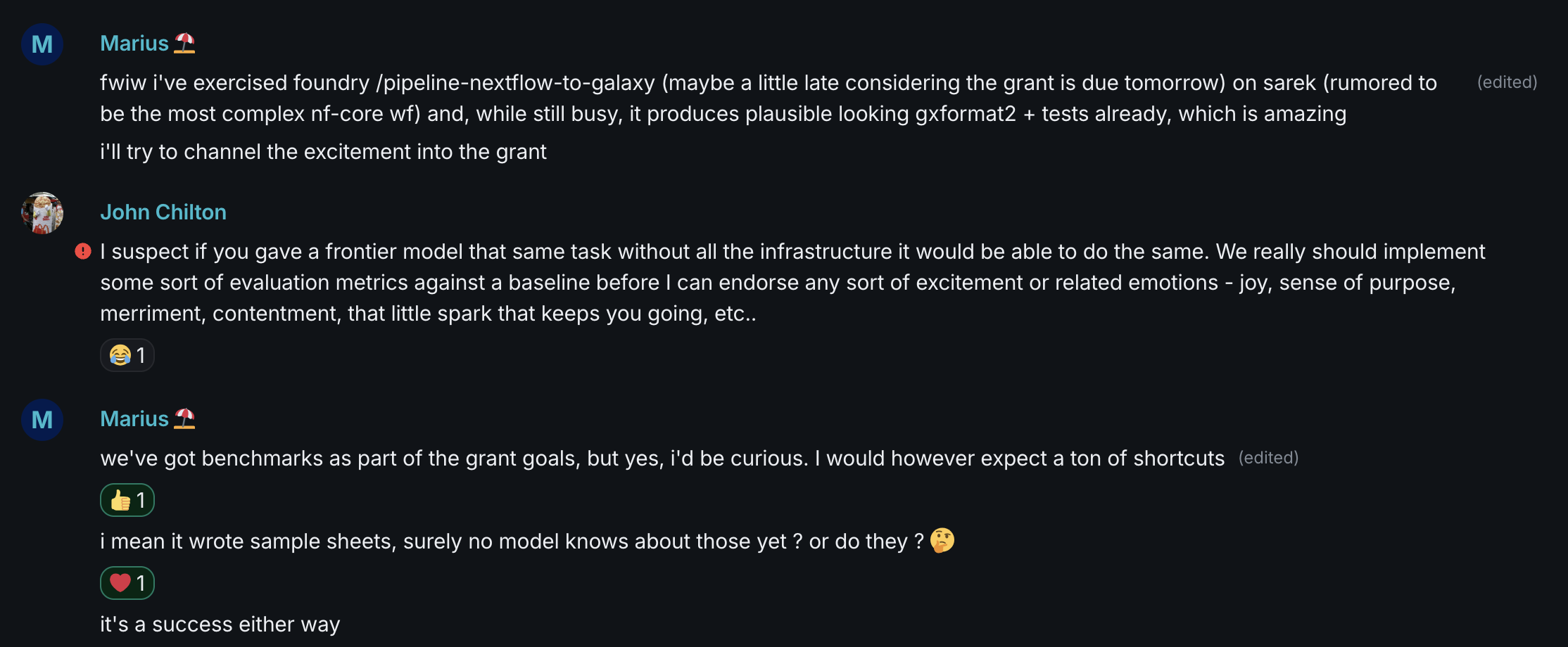
Conversation reporting that the Nextflow to Galaxy Foundry pipeline produced a plausible gxformat2 workflow and tests for the complex nf-core sarek pipeline
The red dent at the edge of human knowledge, enlarged until the original circle is mostly outside the frame

We’re producing exciting results the model alone probably couldn’t replicate.

But every run also produces Planemo, gxwf, and Galaxy issues and PRs.

Sample sheet uploads, job cache tweaks, workflow draft schema changes, and more.

The problem is not closed — it is active research at the edge.

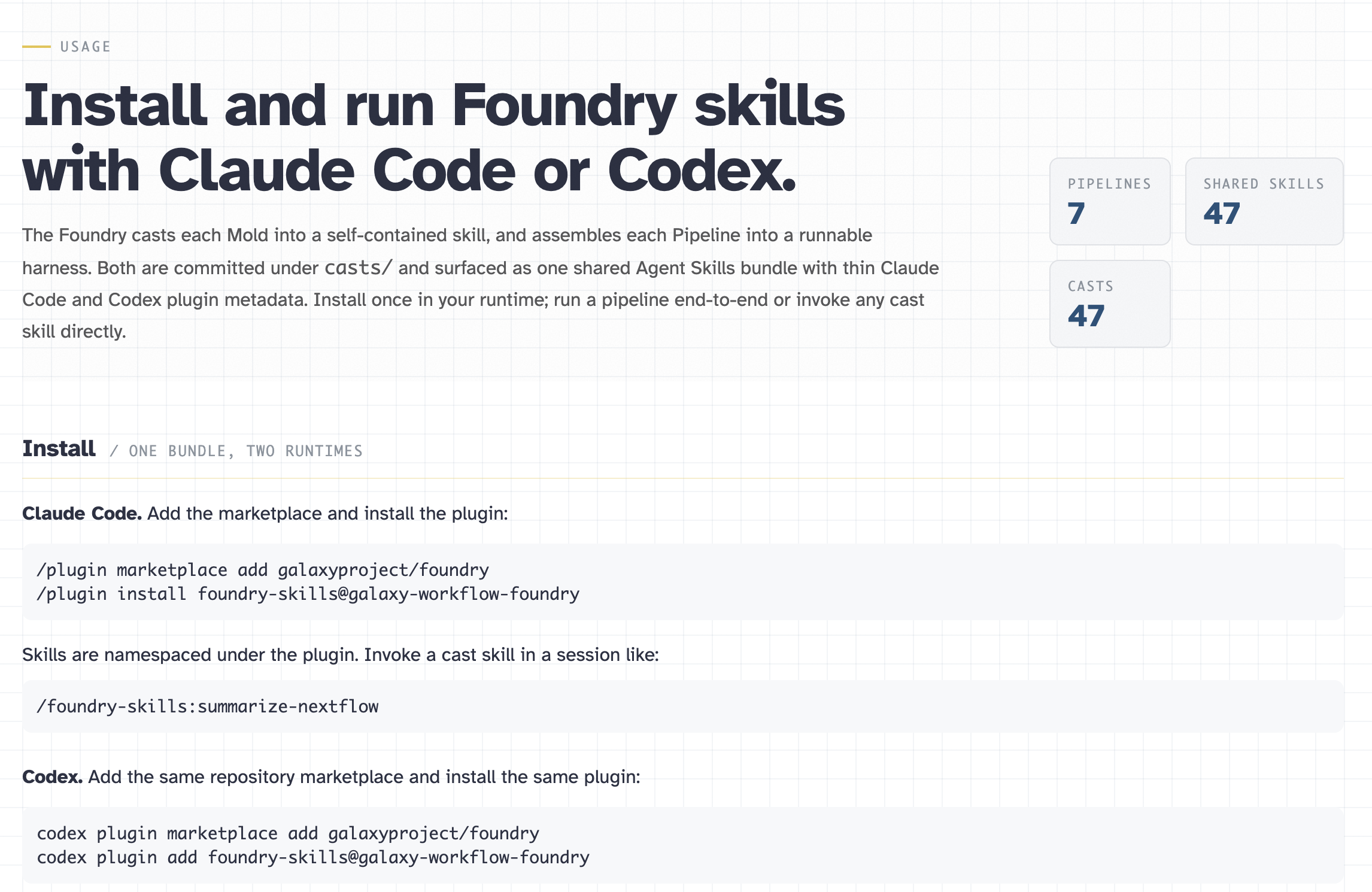
Foundry usage page: install and run Foundry skills with Claude Code or Codex. Counters read 7 pipelines, 47 shared skills, 47 casts. Install snippets show the plugin marketplace add and install commands for Claude Code and the equivalent codex plugin commands, plus invoking a cast skill as /foundry-skills:summarize-nextflow

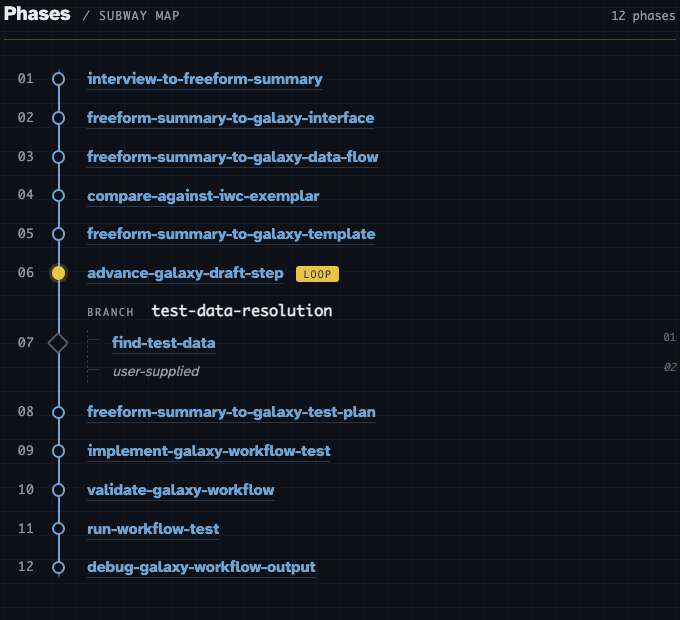
Interview → Galaxy

A conversation becomes a typed workflow draft, then a validated workflow.
Normalize an interview into a shared freeform summary.
Design Galaxy interface and data flow, then compare to IWC exemplars.
Loop over advance-galaxy-draft-step until no drafty step remains.
Validate, test, execute, and debug with deterministic tooling in the loop.
Foundry interview to Galaxy pipeline page showing phases, loop, and branch
GCC 2026 source slide ↗

Patterns are the reusable moves

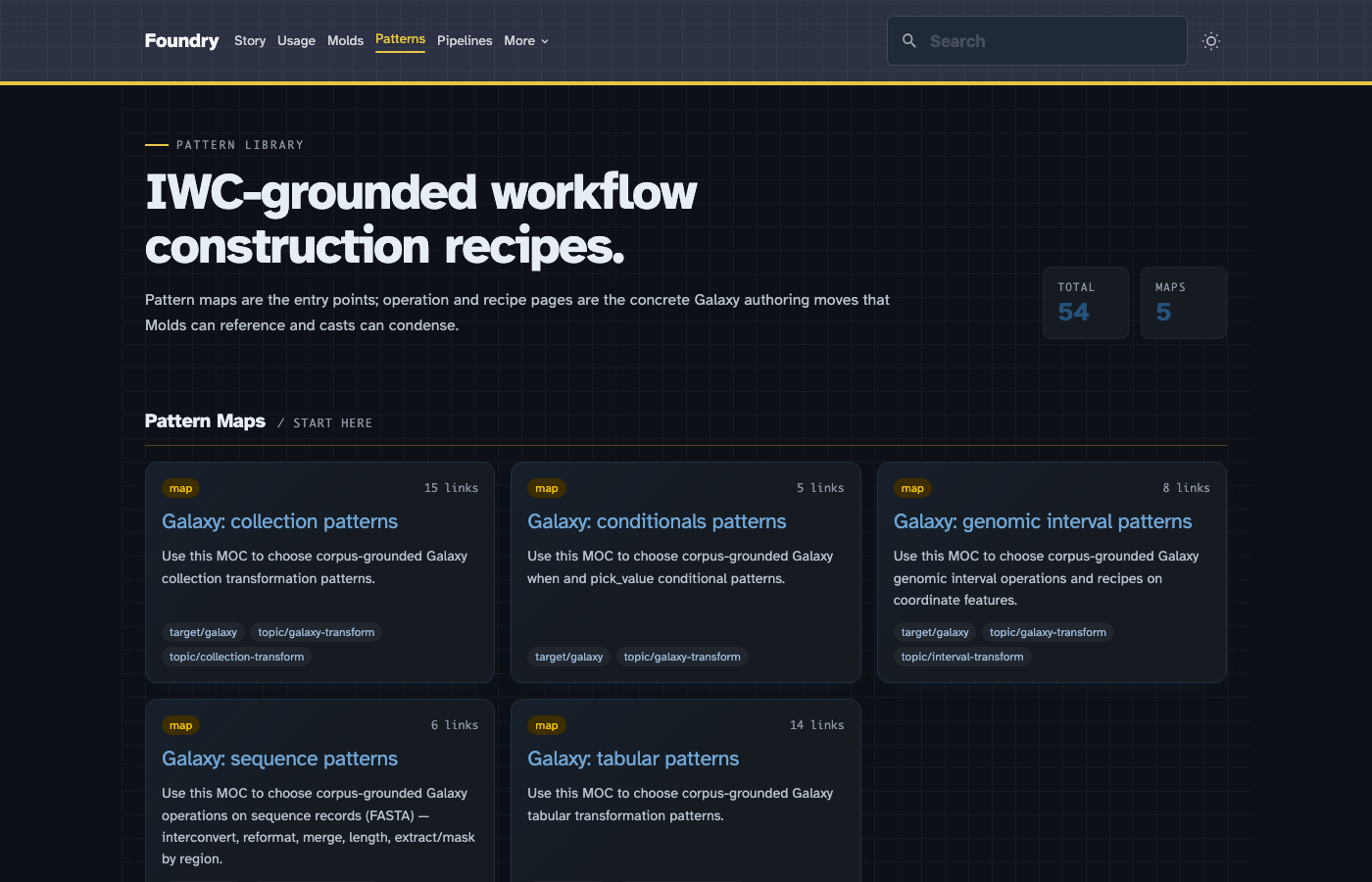
1. Patterns MOC
Foundry patterns index with pattern maps
Start from corpus-grounded maps, not a flat pile of recipes.
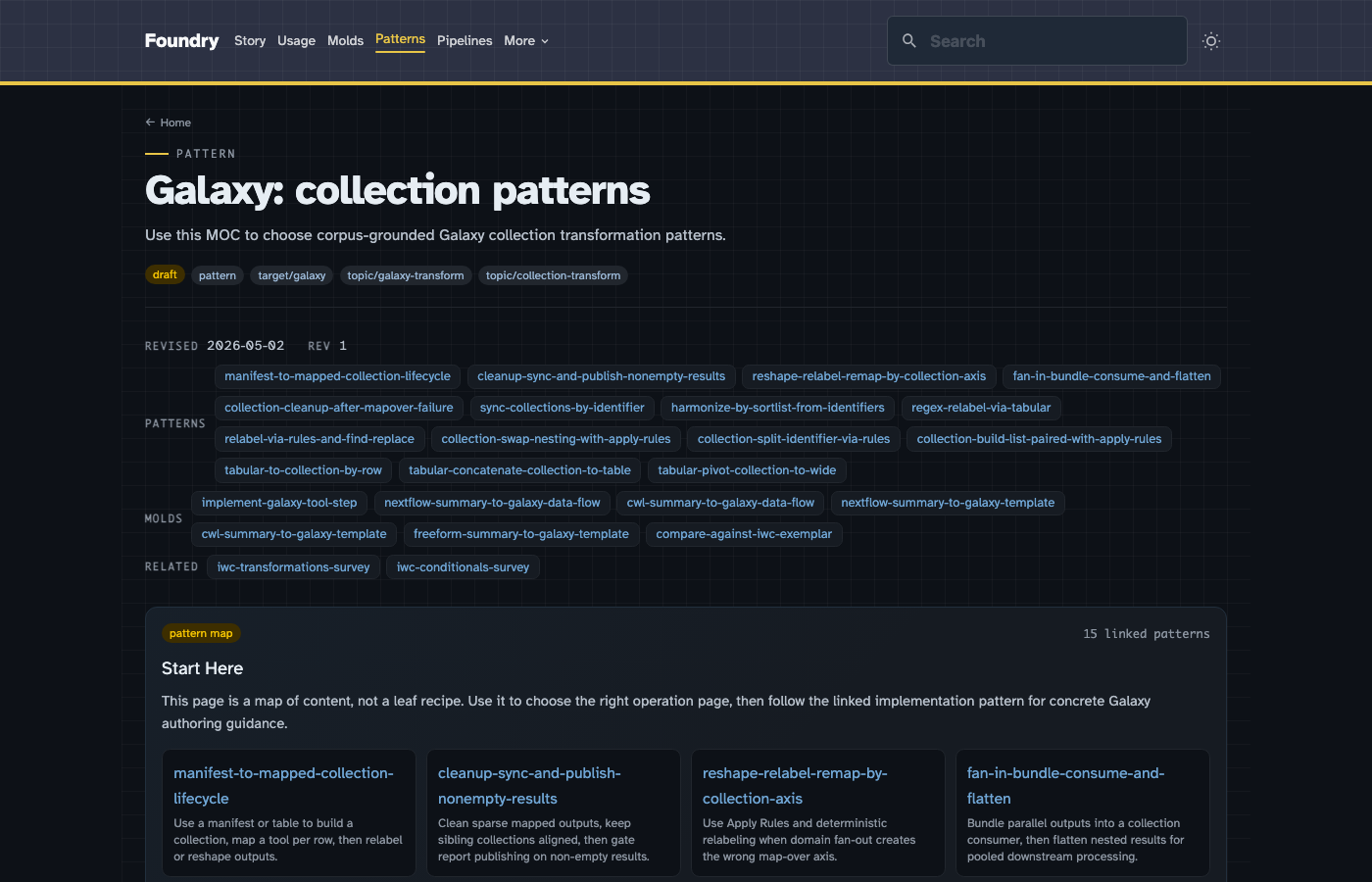
2. Collections MOC
Foundry Galaxy collection patterns map of content
A map-of-content routes the agent to the right collection operation.
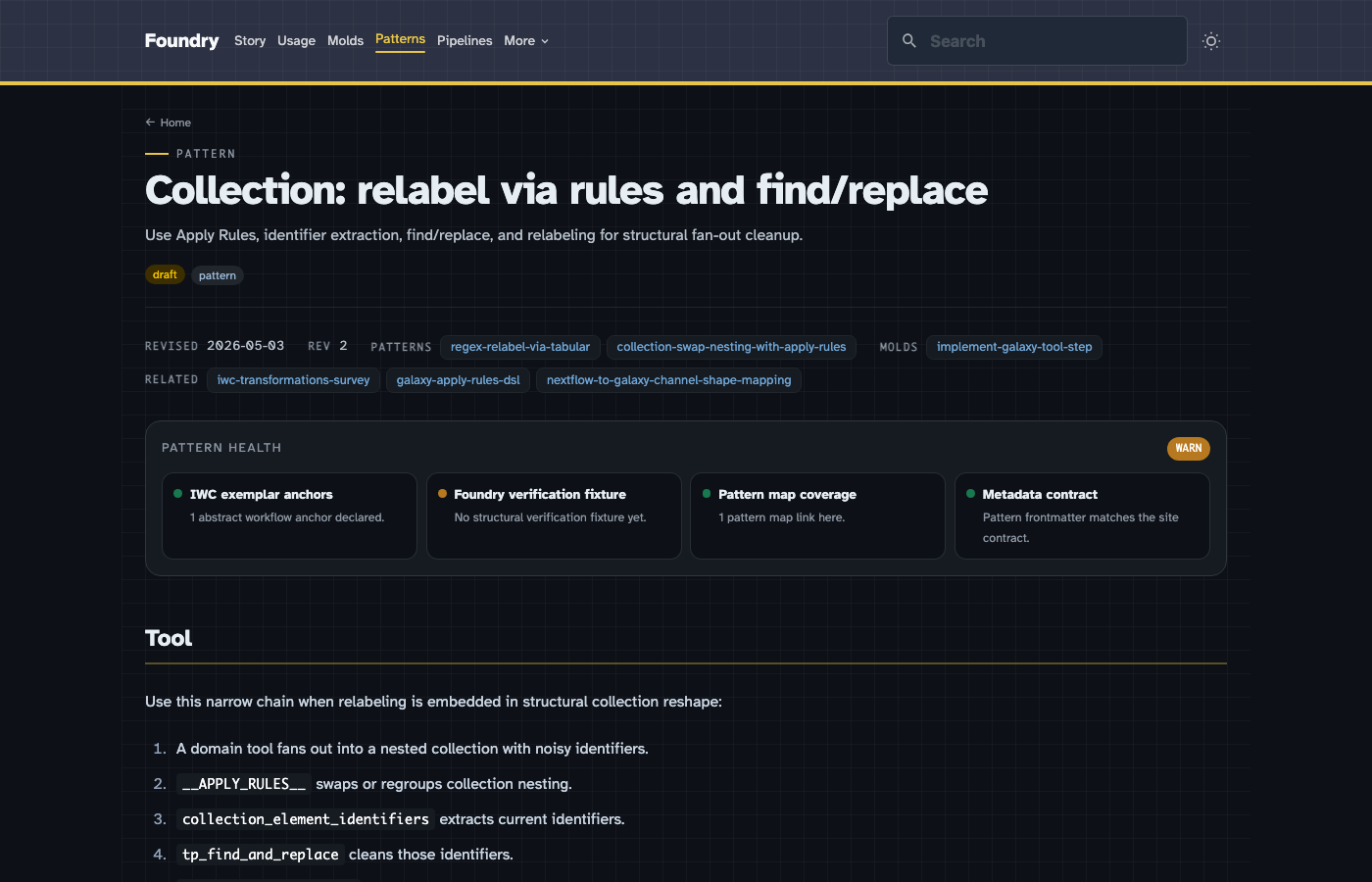
3. Concrete recipe
Foundry relabel via rules and find replace pattern page
Leaf patterns preserve when-to-use guidance, pitfalls, and exemplar links.
Patterns stay human-readable; casts can package the same evidence as runtime references.
GCC 2026 source slide ↗

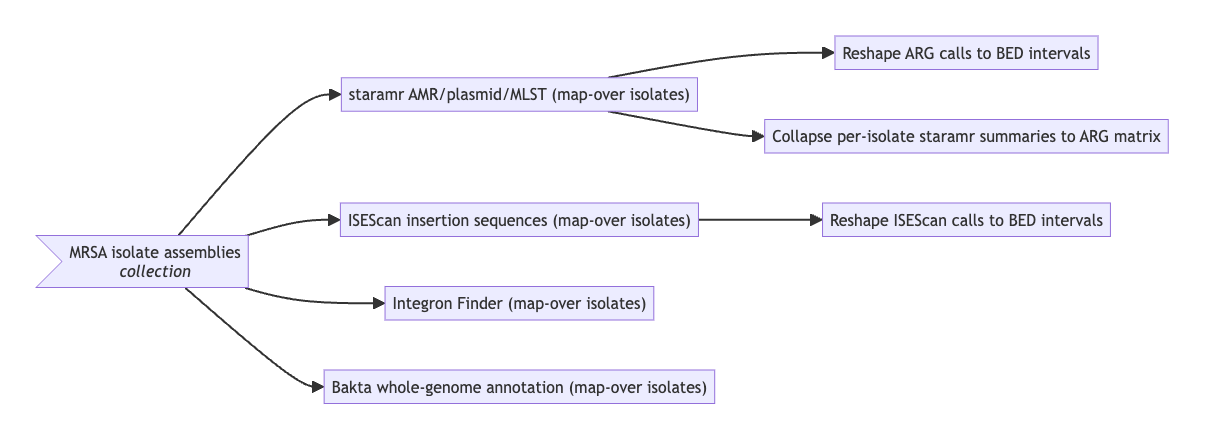
Structured Drafting of Workflows

Structured workflow draft diagram with concrete and deferred stepsExtracted workflow spine diagram showing concrete executable workflow steps
GCC 2026 source slide ↗

Schemas are inherited as contracts
and enforced as rails

Upstream owns the contract. The Foundry pins it, records its lineage, and carries it into the cast.

Galaxy modelJSON Schemapinned package
Copy, don’t paraphrase
Upstream schemas are synchronized or imported verbatim. Their version and provenance stay visible.
Carry the authority
Casting resolves the named package export and serializes the exact schema into the portable skill bundle.
Check the artifact
draft-validate, validate, and validate-tests gate authored artifacts before expensive execution.

The schema travels with the skill. The deterministic runtime owns the verdict.

Turn upstream interfaces into
deterministic agent rails

Instrument the real interface, formalize it, and put it inside the author–validate–fix loop.

Instrument upstream
Generate Planemo references from cli_metadata; import machine-readable gxwf command specs.
Formalize the interface
Preserve synopsis, arguments, option types, defaults, requirements, package, and resolved version.
Add local synthesis
Keep examples, gotchas, triggers, and operational guidance around—not inside—the upstream contract.
Cast a sidecar
Ship the exact command contract and Foundry revision as portable, versioned JSON beside the skill.
draft-next-step → author one step
→ draft-validate --concrete → gxwf validate
→ validate-tests → planemo test

The model translates and repairs. Independent tools select, validate, execute, and classify.

Part Five

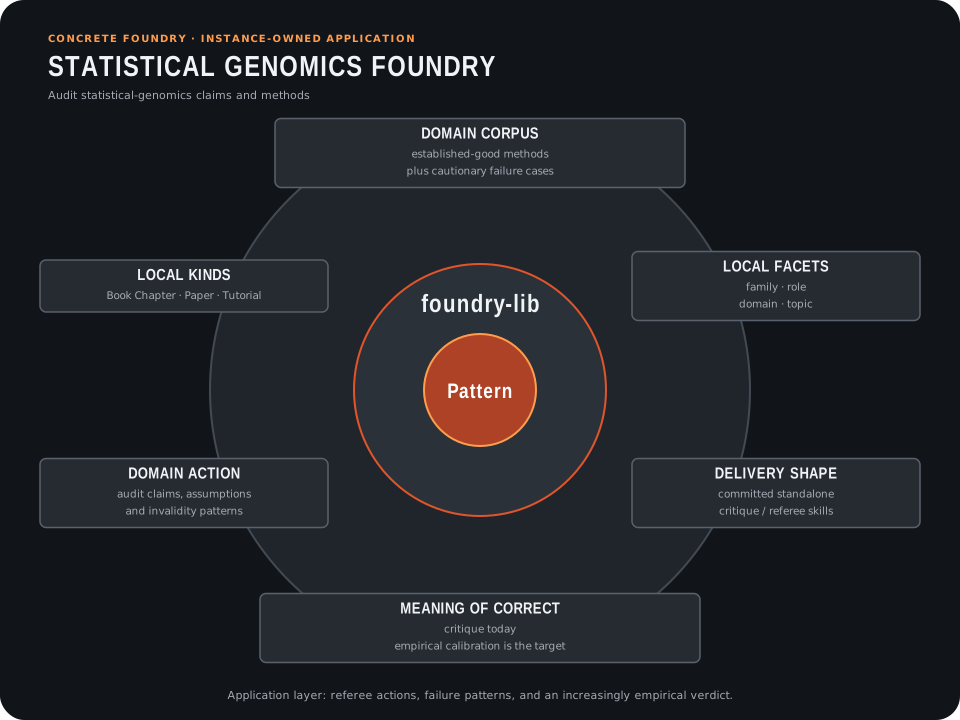
The Statistical Genomics Foundry

A “failed” experiment that sharpened the ideas.
Statistical Genomics Foundry profile ↗
Statistical Genomics Foundry responsibility rings showing good methods and cautionary failures, local statistical kinds and facets, audit actions, referee skills, and empirical calibration around the shared Pattern and foundry-lib core

A solid rule:
derive abstractions from a second application

There are two reasonable ways to interpret it.
Build, then extract
Finish the second application. Compare the two working systems. Extract the shared surface from the result.
Extract as you build
Build the second application and pull abstractions from the first whenever the new implementation needs them.

For a good developer, these approaches can converge: lessons from the first implementation naturally guide the second.

Fresh context breaks that equivalence

Every new agent session started without the lessons of the Workflow Foundry.
A developer carries the why
The first implementation’s failures and design choices shape the second implementation.
A fresh agent sees the next task
It is perfectly willing to build the smallest thing directly in front of it right now.

None of the lessons are learned if none of the context survives.

The second Foundry diverged at every level

roughly the same
technology stack
+
some similar
concepts

still produced a very different Foundry.

Extracting the shared surface was tedious. It resisted automation in exactly the place where abstraction was supposed to help.

I seeded the Foundry wrong.

It started with guiding principles that were vaguely fine—perhaps even useful—but did not reflect getting shit done.

They kept pulling the work toward conclusions I did not believe in.
The agent was so much more confident than I was.

I was trying to do four things at once

Textbook knowledge
Build skills that capture established knowledge—even after the replication experiment suggested that was a little silly.
Papers
Turn individual statistical genomics papers into durable skills.
bioSkills
Reconstruct and replicate a huge catalog of generated bioinformatics skills.
General judgment
Generalize “assess the statistical validity of a method” from a handful of particular examples.

Each new document propagated values that were documented—and that I did not believe in.

Hundreds of skills are not
hundreds of specifications

You look at bioSkills and think there must be a principled way to reconstruct them.

  • They have never been run.
  • Inputs are not concretely defined.
  • Expected outputs are not documented.
  • There is no execution or test path.
  • Licensing and installation remain unresolved.

The catalog contains ideas for programs—not enough operational evidence to reconstruct working programs.

A better skill mill is still a skill mill

The Foundry pattern could build a better one. It could even hide most of the implementation details.

That does not reflect who I am or my values.

Writing a program—which a skill is—without a concrete implementation, without documenting its inputs and outputs, and without explaining how to test it is not who I am.

It being 2026, and an agent being remarkably good at figuring out how to use it on the fly, is not going to change me.

So I stepped back.

I addressed the implementation and scope failures together in a new repository:

more focused, more actionable—and still hugely ambitious.

Part Six

The Topological Data Analysis
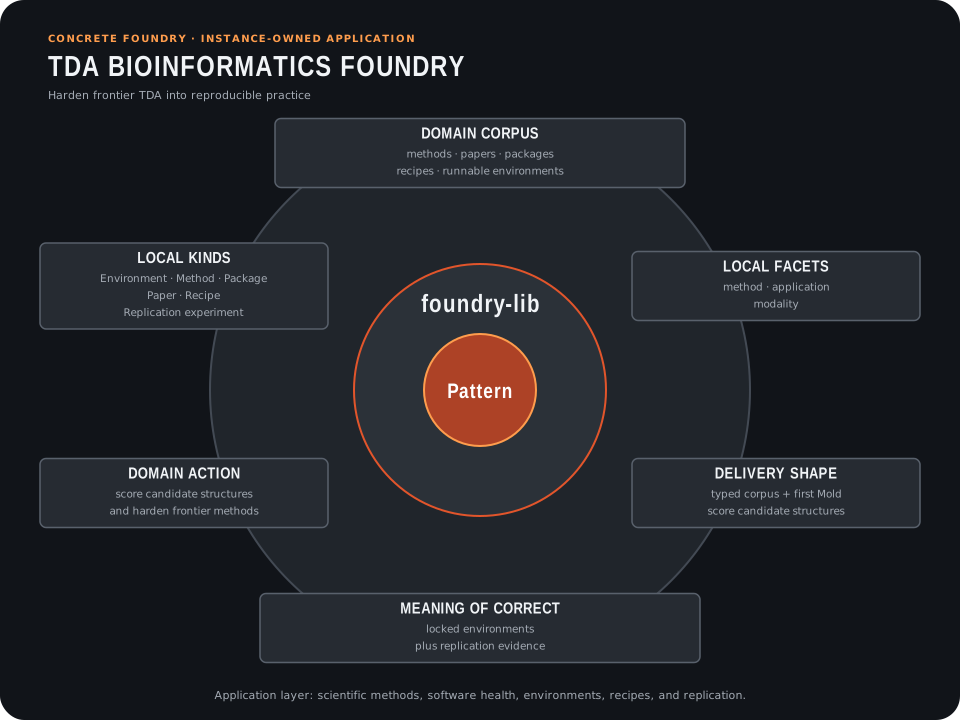
for Bioinformatics Foundry

A pattern for bioinformatic skills and knowledge at the edge.
TDA Bioinformatics Foundry profile ↗
TDA Bioinformatics Foundry responsibility rings showing its method corpus, local kinds and facets, candidate-structure scoring Mold, reproducible environments, and replication evidence around the shared Pattern and foundry-lib core

The implementation issues

foundry-lib
I was extracting shared infrastructure before multiple concrete Foundries had earned the abstraction.
Constructing a Foundry from one prompt
A huge bootstrap prompt made architectural and content decisions before the implementation had produced evidence.
Both moved abstraction ahead of evidence.

Planning Ahead

I had already done a huge amount of research—breaking the domain into kinds and collecting concrete examples and goals for each one.

Papers
Replication experiments
Recipes
Environments
Abstract pipelines
Methods
Galaxy tools
Trainings
Workflows
The research was real.
Portable bioinformatics for humans and agents
Build freely.
Share durably.
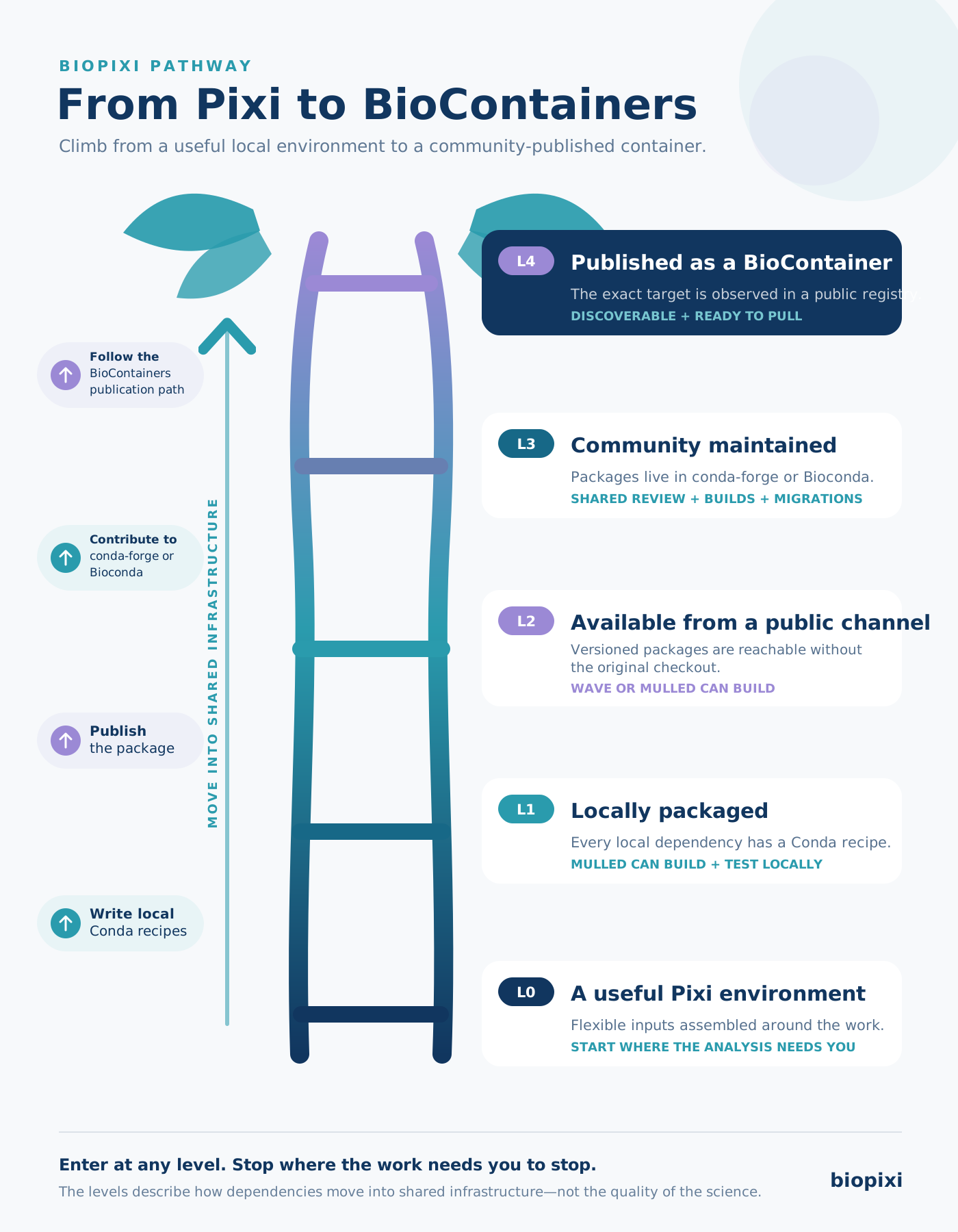
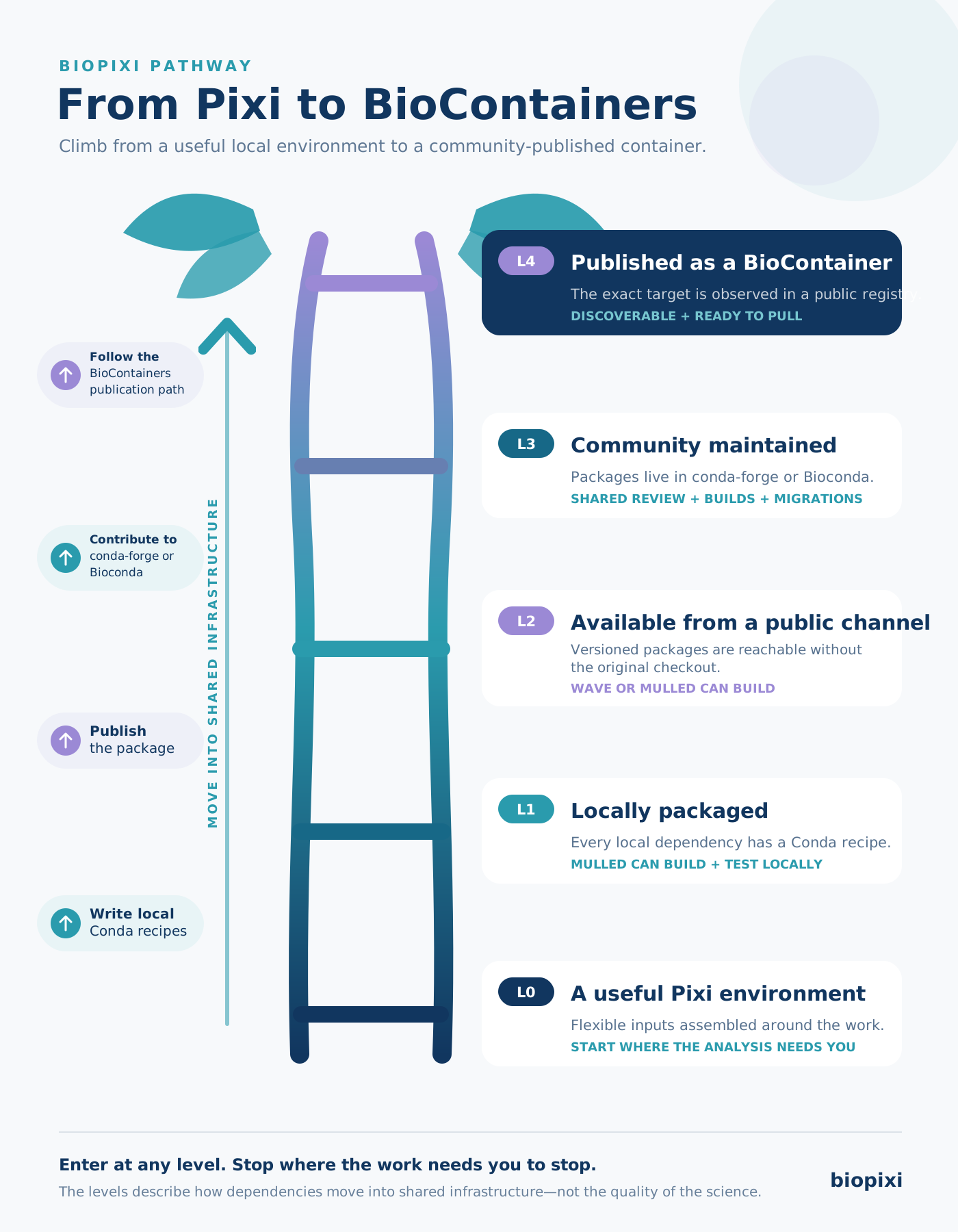
Usher a Pixi environment from active development to a durable BioContainer—with practical guardrails and one concrete step forward at a time.
jmchilton.github.io/biopixi ↗
Biopixi DNA firefly mark
Biopixi ladder from a useful local Pixi environment to a community-published and observed BioContainer

Hardening leaves receipts

Upstream hardening

Sylverity/petls-pytorch#1
Merged and released: removed an unnecessary runtime dependency.

yubingapril/TopoQA#1
Open: reported the released (x,y,y) coordinate defect.

bdjones13/PETLS#2
Open: requested the missing software license.

17
local conda recipes
12
verified and ready to upstream
conda-forge/staged-recipes#34367 ↗
Submitted · every build and lint check green · awaiting review
3 more are license-eligible but await build verification · 1 is blocked on licensing

TODO: file the prepared TopoMetry fixes and the documented scVelo defects upstream; add their issue and PR numbers here.

Open implementations—and studies that tested the claims

Published mathematics → open code
Sylverity/petls-pytorch
Persistent Laplacians rebuilt for PyTorch and CUDA.
jmchilton/open-topoqa-featurizer
Paper-derived persistent-homology interface features with corrected coordinates.
jmchilton/open-topoqa-scorer
Paper-derived graph-attention architecture, retrained into a redistributable model.
Replication studies
topoqa-interface-quality-replication
Reproduced. The headline losses hold; the correlations were pooled and part of the margin depends on a defect.
topometry-cell-cycle-replication
Partially reproduced. The direction holds; the seeded 2-D layouts do not.
hiponet-melanoma-replication
Inconclusive. 67.27% versus 90.90%; the locked Linux/CUDA arm remains.

Provenance boundary: open-topodockq-featurizer is also clean-room, but recovered through black-box observation rather than from the paper alone.

A paper becomes an executable, guarded action

score-docking-poses ↗

Validate candidate complexes for one target, run the paper-derived open TopoQA featurizer and scorer in one locked environment, preserve failures, then return a stable ranking and selected structures.

A prediction—not measured DockQ or biological validation.

What the survey questions turned into
Topology does not uniformly help. It hurts in-distribution rank correlation but improves out-of-distribution HAF2 ranking.
The conventional baseline is strong. Thirty-two amino-acid, DSSP, SASA, and backbone-angle features carry substantial signal.
The headline metric is saturated. Free pLDDT and DProQA can win top-1 loss while barely ranking the remaining poses.
The defensible value is ordering. The topological model earns its keep on rank quality and top-k selection.

TODO: quantify persistent H1 in the TopoMetry cell-cycle extension and complete HiPoNet’s Linux/CUDA arm.

A red dent enlarged at the boundary of human knowledge

Panel from The illustrated guide to a Ph.D. by Matt Might · CC BY-NC 2.5
Instead of building a mill,
I feel like I’m pushing on the boundary!

A pattern for pushing into a domain with agents

I think this is a really nice set of ideas for pushing on a domain with agents. It feels like a competent implementation of a pattern that lets a human and an agent build up rich abstractions for interacting with that domain.

It is not a turnkey solution or one-size-fits-all infrastructure.

Knowledge about a domain—and descriptions of actions over it—should reflect the structure of the domain itself.

Part Seven

Discussion Questions

Three questions from Dr. Goecks.
Part 7.1

“How will we know when a Foundry skill is needed vs. what’s available in the LLM/harness and/or existing skill repos is not sufficient?”

— Dr. Goecks
Part 7.2
“When does Foundry deliver a real benefit to users vs. existing solutions?”
— Dr. Goecks
Part 7.3
“What are the roles of the scientist/user in Foundry?”
— Dr. Goecks
Part Eight

Checks That Actually Fire

How a Foundry evaluates the skills it casts.
Beside every Mold

An oracle, not a test suite

eval.md
the abstract checker
Fixture-independent ## Property: blocks, each marked check: deterministic or check: llm-judged. How to judge any output.
scenarios.md
the concrete cases
One ## Case: per fixture, carrying its own expect: assertions. What you feed in and what comes back.
%%{init: {'theme':'base','themeVariables':{'fontFamily':'Atkinson Hyperlegible','primaryColor':'#25537b','primaryTextColor':'#ffffff','primaryBorderColor':'#2c3143','lineColor':'#58585a','fontSize':'15px'}}}%%
flowchart LR
  mold["Mold<br/>index.md + references"]
  scen["scenarios.md<br/>bind one case"]
  srun["run the cast skill"]
  chk{{"eval.md<br/>score every property"}}
  jrnl["refinements/<br/>decision: eval-add"]
  mold --> srun
  scen --> srun
  srun --> chk
  chk --> jrnl
  jrnl -. "reviewed, then re-cast" .-> mold
  classDef nfile fill:#edf4fa,stroke:#25537b,color:#2c3143;
  classDef nrun fill:#25537b,stroke:#2c3143,color:#ffffff;
  classDef nchk fill:#f6f8fa,stroke:#8c6d1f,color:#2c3143;
  class mold,scen,jrnl nfile;
  class srun nrun;
  class chk nchk;

A check: deterministic property earns its verdict by running the oracle — gxwf validate, a structural diff, planemo test. Marked “not run” because the tool looked expensive, it is a failed trial, not a weaker pass.

Pipelines

One journey, an oracle at every step

%%{init: {'theme':'base','themeVariables':{'fontFamily':'Atkinson Hyperlegible','primaryColor':'#25537b','primaryTextColor':'#ffffff','primaryBorderColor':'#2c3143','lineColor':'#58585a','fontSize':'15px','tertiaryColor':'#ffffff','tertiaryBorderColor':'#d6dbe2','tertiaryTextColor':'#25537b'}}}%%
flowchart LR
  subgraph J["one journey · one scenarios.md case"]
  direction LR
  p1["phase<br/>output"] --> v1{{"Mold<br/>eval.md"}}
  v1 -. "fix it here" .-> p1
  v1 --> p2["phase<br/>output"] --> v2{{"Mold<br/>eval.md"}}
  v2 -. "fix it here" .-> p2
  end
  v2 --> pe["pipeline eval.md<br/>cross-step, end to end"]
  pe -. "refinements to Molds and pipeline" .-> p1
  classDef nphase fill:#25537b,stroke:#2c3143,color:#ffffff;
  classDef nchk fill:#f6f8fa,stroke:#8c6d1f,color:#2c3143;
  classDef nend fill:#edf4fa,stroke:#25537b,color:#2c3143;
  class p1,p2 nphase;
  class v1,v2 nchk;
  class pe nend;
[loop] phase
Judged at its endstate, not per iteration. advance-galaxy-draft-step runs until gxwf draft-next-step reports no drafty step remains.
[branch] phase
Carries no oracle of its own. Whichever Mold the branch chose, its eval.md is the one that applies.
executable phase
Run, never emulated. Reaching run-workflow-test without a green planemo test means the journey did not complete.

A miss caught at the phase that produced it beats the same miss surfacing three phases downstream.

Worked example · discover-shed-tool

A false miss passes every static check

/test-pipeline interview-to-galaxygxwf tool-search integron_finderNo hits
the wrong branch
A miss falls through discover-or-author — so the run authors a wrapper for a tool the Tool Shed already ships.
the tool was right there
integron finder scores 34.60 and resolves to iuc/integron_finder, changeset 5429646e486d. Only the raw id token missed.
what closed it
A journal entry, decision: eval-add — a normalization step in the procedure, a new property in eval.md, and a re-cast.

A miss that an obvious name-variant would have turned into a hit is a failure.

ISEScan’s bare token happened to score, which masked the whole class of bug.

Tier S1 · reference integrity

You cannot read a bibliography and find a wrong DOI

1 in 277
PubMed-indexed papers carried a fabricated reference in early 2026
One in 2,828 in 2023. CITADEL, Topaz et al., The Lancet.
1 in 20
NeurIPS 2025 papers carried at least two hallucinated references
Camera-ready — peer review did not catch them. Phantom References, 2026.
S1 reference integrity·S2 tool checks·S3 threshold checks
S1 is first because a DOI either names the work its own text describes, or it does not — no execution, no judgment of the science. S2 and S3 are named and unbuilt.

The repo owns the corpus. The package owns the mechanics.

Committed, readable, diffable

audit-citations.config.json
Five source globs, trusted citation hosts, request budget.

audit/citation-audit.md
The rendered run. Carries no timestamp and no revision, so it diffs cleanly.

audit/provider-evidence.json
62 normalized provider answers. The offline replay reads only this.

78 / 78
citations resolve to the work their own text describes
78 of 96 reference lines extracted. Coverage is printed beside the verdicts, as a lower bound.
tests/citation-audit.test.ts

pnpm validate replays the audit offline and fails when a citation has no committed evidence, resolves to a different work, or leaves a flagged finding unreviewed.

Weekly, citation-audit.yml re-resolves every identifier against live providers and opens a pull request only when the rendered report changes.

Three DOIs that named other papers

HERMES: Persistent spectral graph software10.3934/fods.2021004 resolves to Markov chain simulation for multilevel Monte Carlo.

Persistent topological Laplacians — a survey10.3390/math13020278 resolves to Prioritization of Preventive Measures … Road Infrastructure Projects.

Persistent sheaf Laplacians10.3934/fods.2024020 is a different work.

Each is a digit error in an otherwise accurate entry. Reading the sentence cannot find it.
Five entries, not three: two of the wrong identifiers had already been copied into a newer note before the audit ran again. A wrong DOI propagates by citation reuse — which is the argument for checking on every build rather than once.
Part Nine

Next Steps

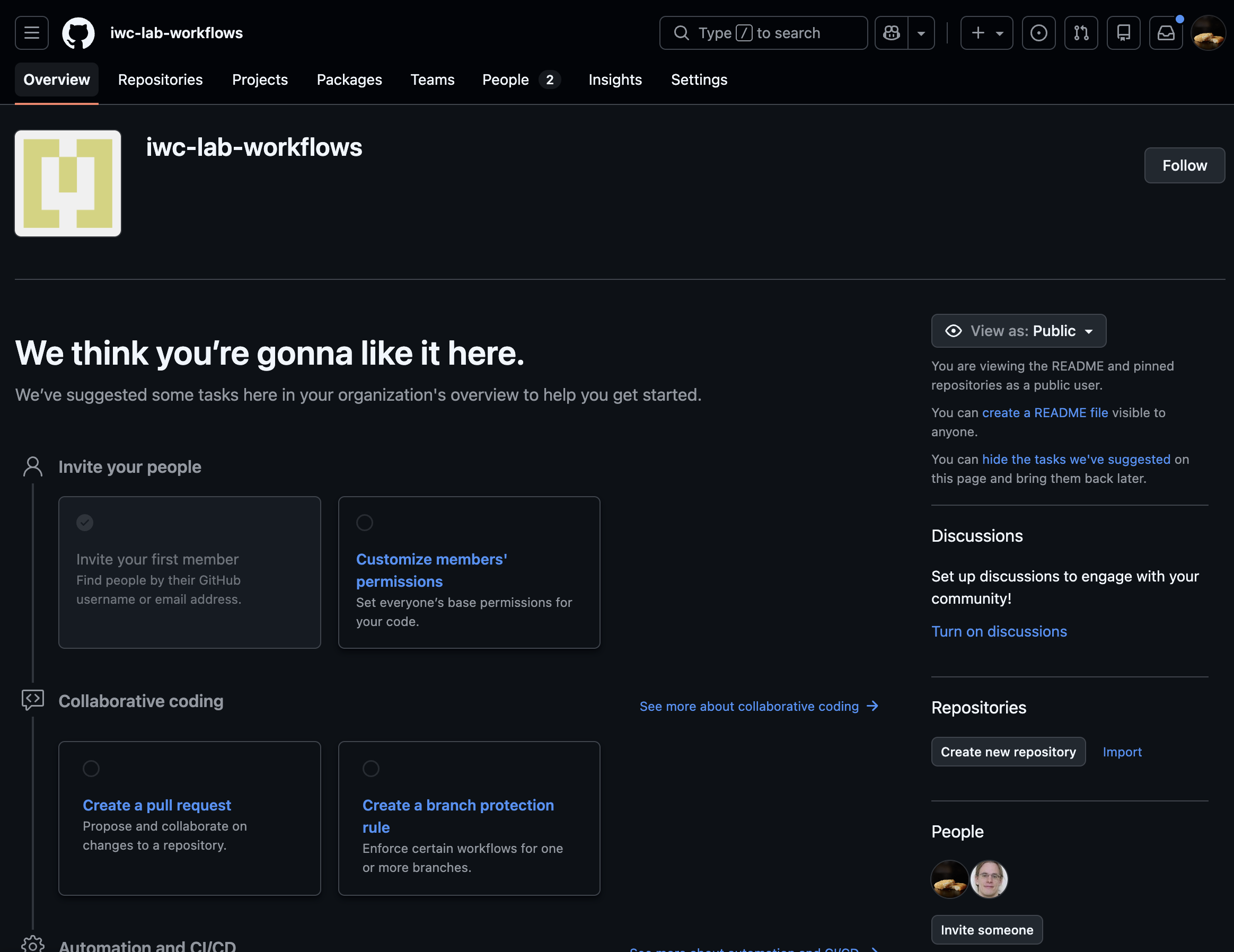
GitHub organization page for iwc-lab-workflows, newly created with two people and no repositories yet
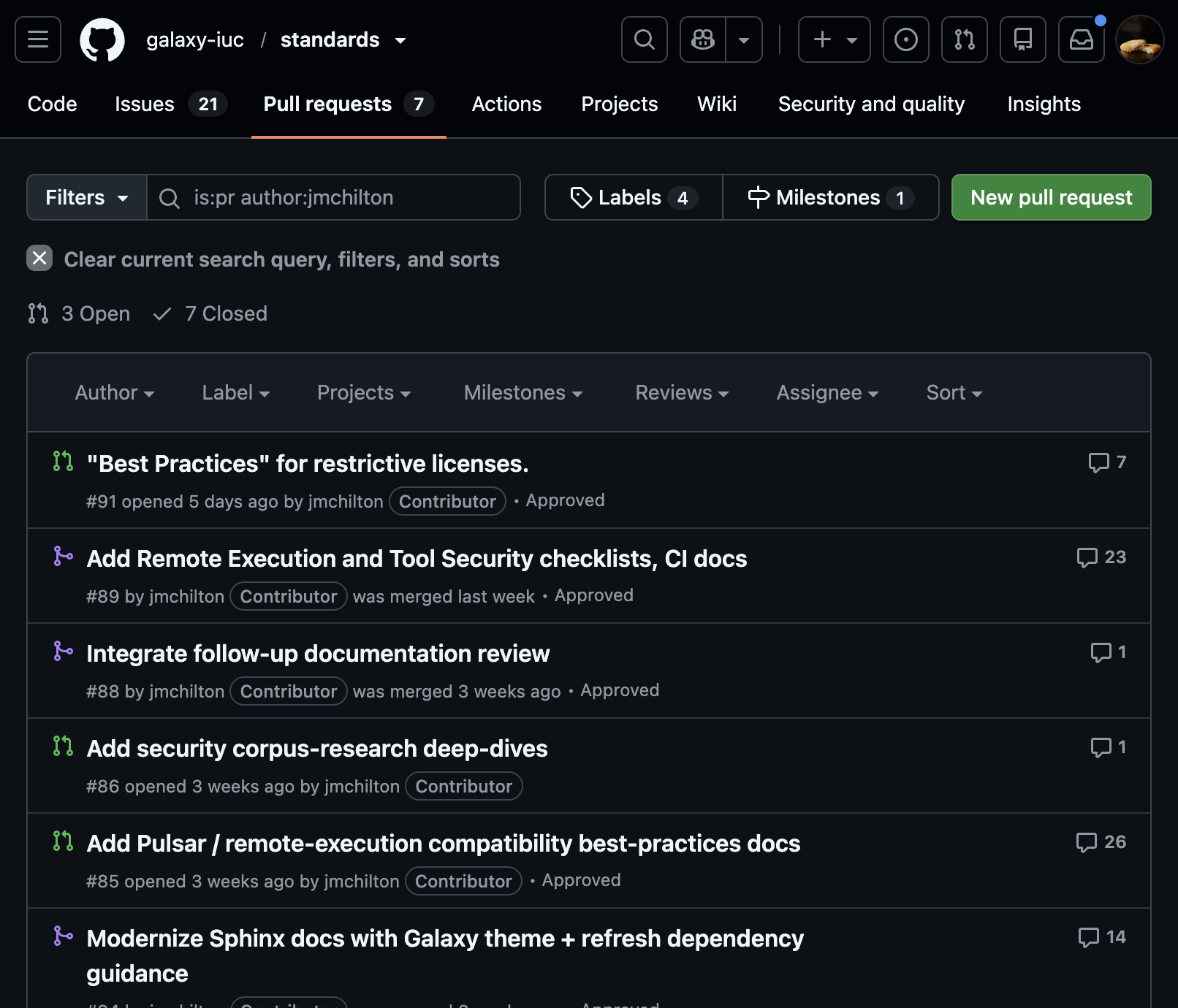
Pull requests authored by jmchilton in galaxy-iuc/standards: best practices for restrictive licenses, remote execution and tool security checklists, follow-up documentation review, security corpus research deep-dives, Pulsar remote-execution compatibility docs, and Sphinx docs modernization
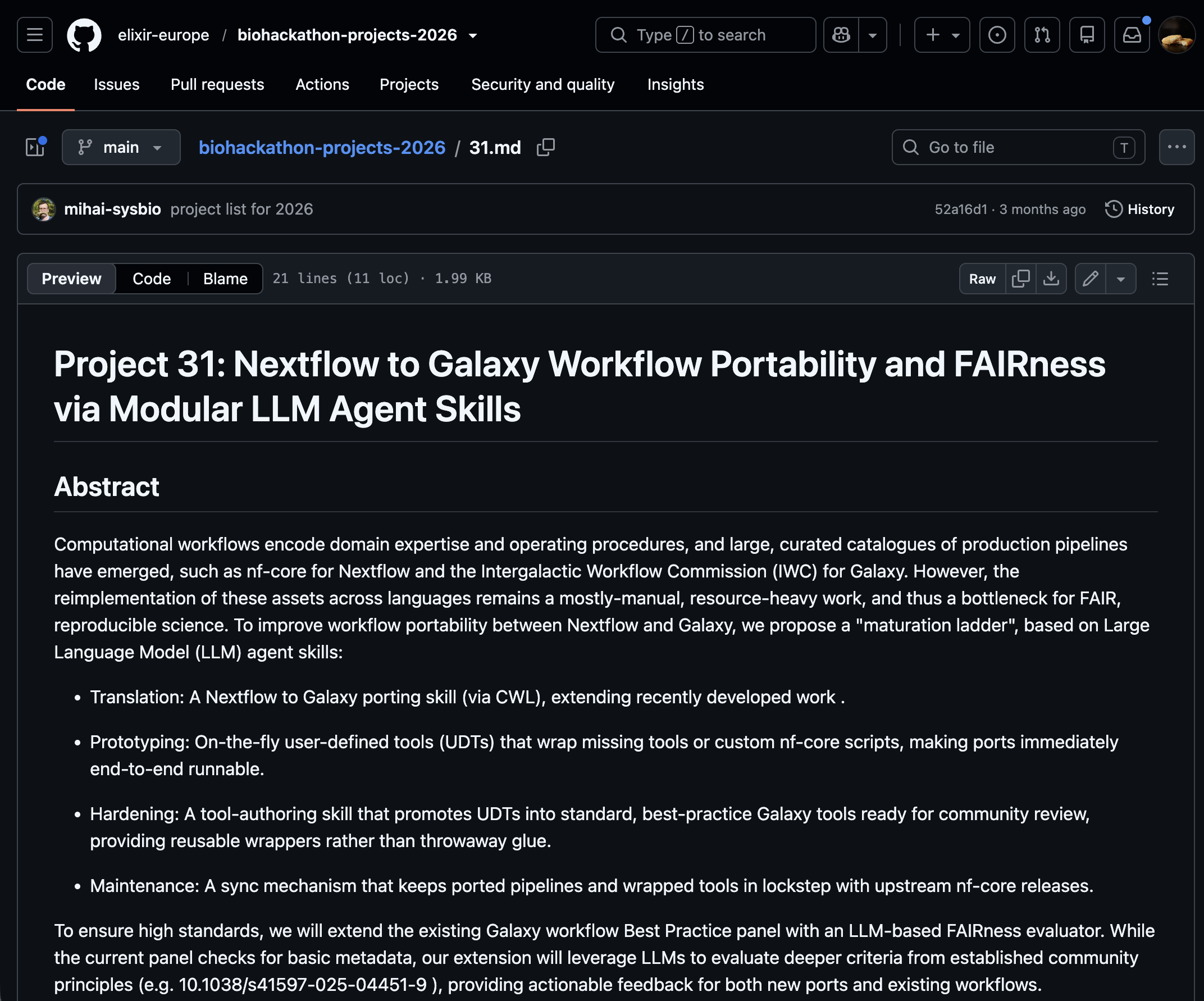
ELIXIR BioHackathon Europe 2026 Project 31: Nextflow to Galaxy Workflow Portability and FAIRness via Modular LLM Agent Skills, proposing a maturation ladder of translation, prototyping, hardening, and maintenance skills
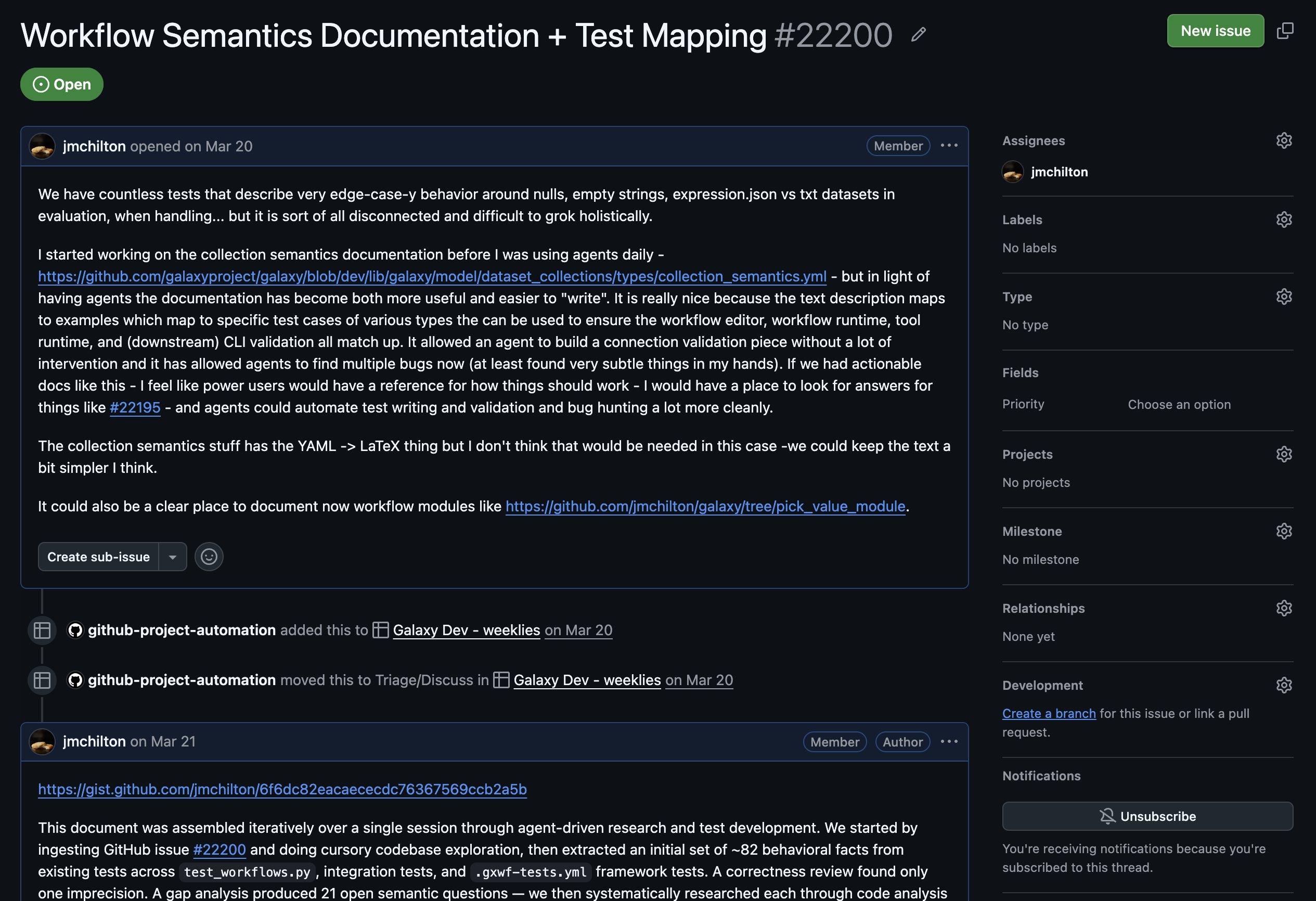
Galaxy issue 22200, Workflow Semantics Documentation and Test Mapping, proposing actionable documentation that maps text descriptions to examples to specific test cases across the workflow editor, runtime, and CLI validation